
Category: 1. Project News
-
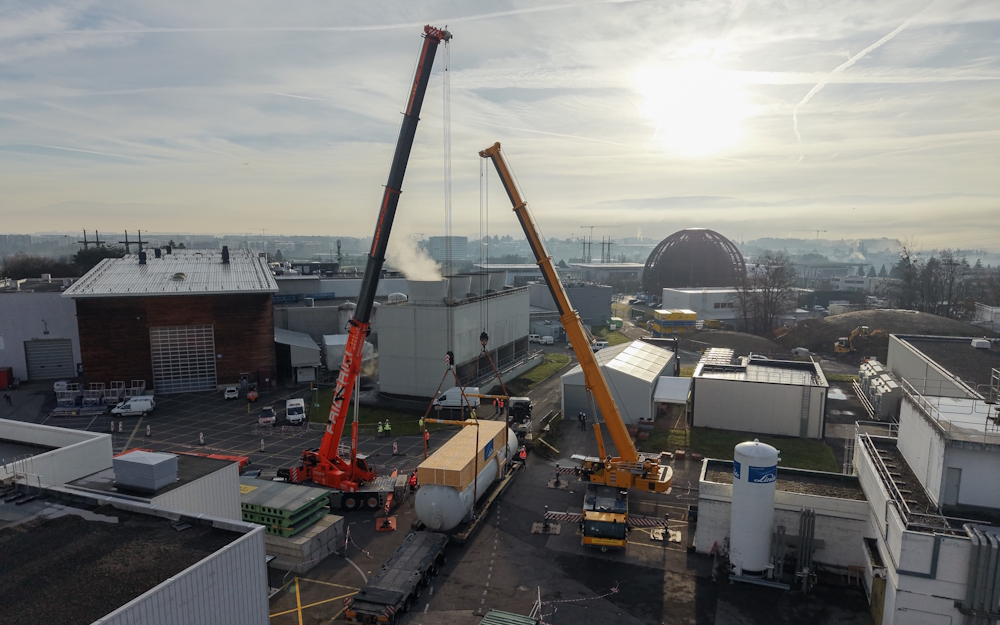
A cryogenic winter for tomorrow’s accelerator
The first large refrigerators for the High-Luminosity LHC have been installed. Read this article on CERN News.
-
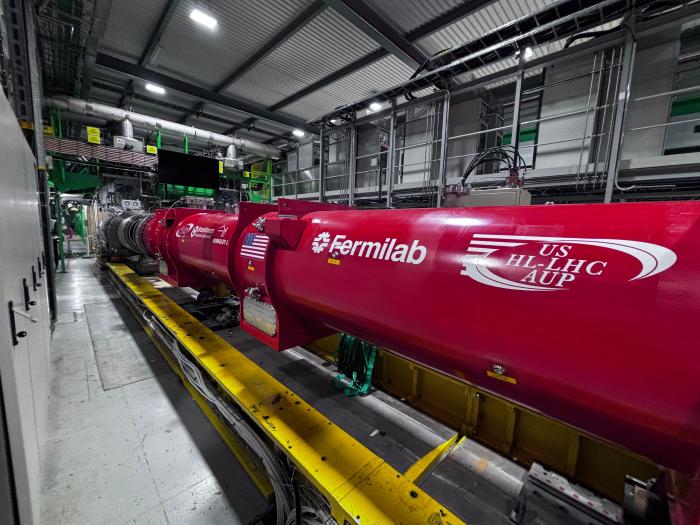
Half of the US-AUP magnet production at CERN
At the end of October we received two more magnets from Fermilab (CA03 and CA05). With these deliveries, half of the units from the US are at CERN! They join the other three magnets already received: CA01 and CA02 for the IT String, and CA04.
-
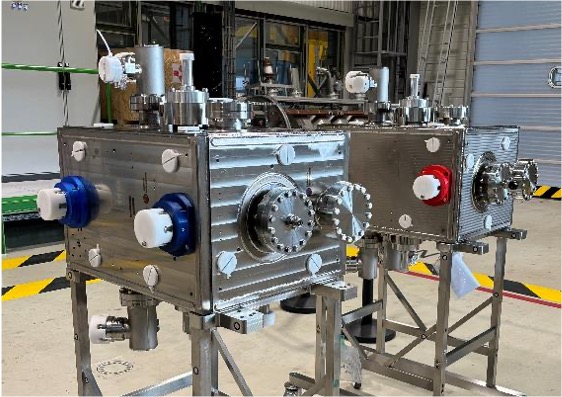
All bare DQW crab cavities produced and qualified
Following etching and most-recent tests of the final 6 bare DQW crab cavities delivered to CERN earlier this year, the whole DQW series has been qualified.
-
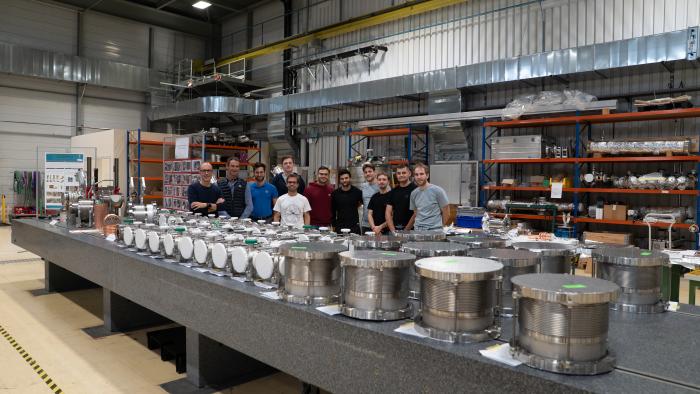
Production of novel deformable RF warm vacuum interconnections
All 83 of the new deformable RF modules, key components to link adjacent vacuum chambers in the LHC, have been produced at CERN, marking a significant milestone for the HL-LHC project.
-
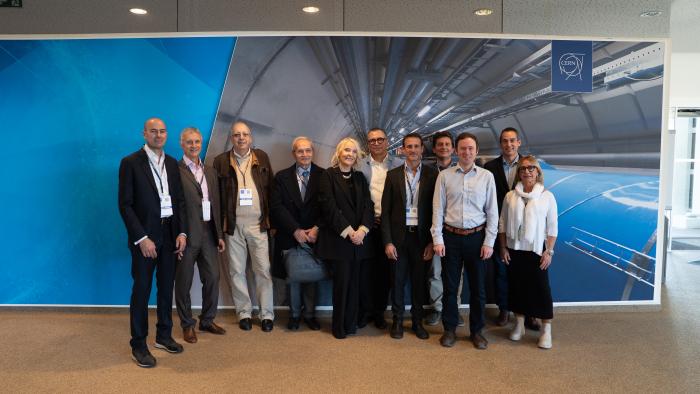
All components for the Cold Powering Systems of the HL-LHC now at CERN
At the end of October 2025, ICAS delivered to CERN the last of the ten complex MgB₂ cable assemblies needed for the Superconducting Links of the Cold Powering Systems that will be used for connecting the magnets to the power converters in the HL-LHC.
-
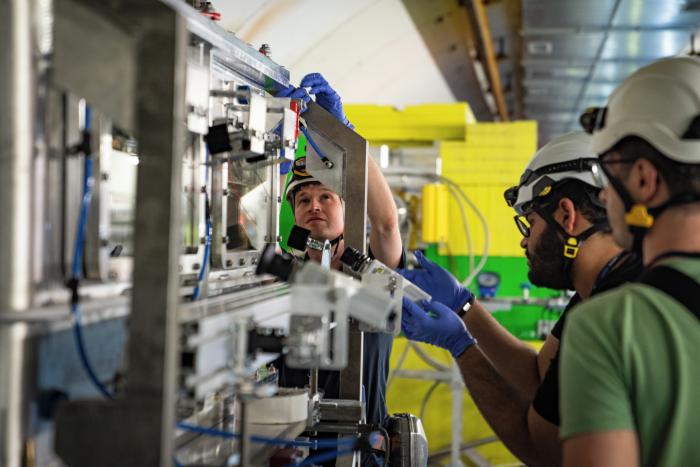
New beam dump design for High-Luminosity stored beam energies
In the LHC beam dumps, the energy stored in the proton beams must be safely absorbed by the core materials. Due to their exceptional thermal shock and radiation resistance, carbon-based materials have been successfully used for this purpose since LHC Run 1.
-

The Pakistan Atomic Energy Commission (PAEC) and CERN sign a New Framework Collaboration Agreement
On 30 September 2025 the Pakistan Atomic Energy Commission (PAEC) and CERN concluded a Framework Collaboration Agreement, aimed at strengthening the scientific and technical cooperation with the High-Luminosity LHC (HL-LHC) project. Under this agreement – concluded within the scope of HL-LHC Work Package 8, which focuses on the interface between the LHC experiments and accelerator…
-
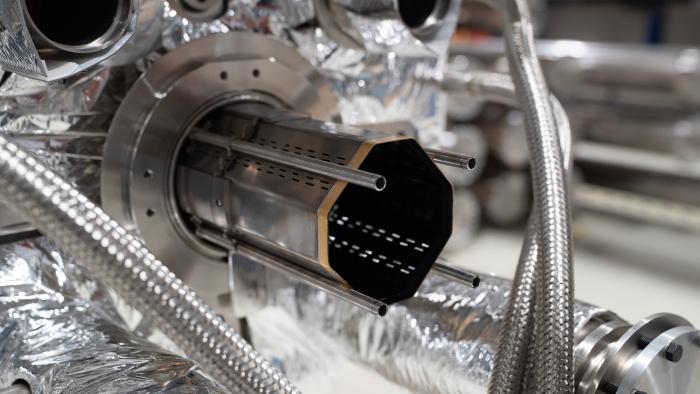
First novel beam screen inserted into a cold mass: first HL-LHC magnet nearly fully ready for the tunnel!
On Wednesday 29th October 2025, the first novel HL-LHC beam screen was inserted into a cold mass, meaning that the first HL-LHC magnet will soon be fully ready for the tunnel!
-
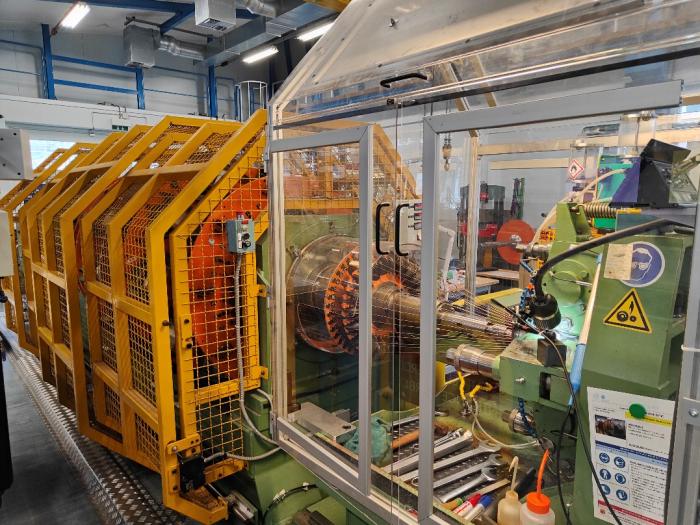
Completion of the production of the Nb3Sn cables for MQXFB magnets
The production of all sixty series Nb3Sn superconducting Rutherford cable lengths marks an important milestone for the manufacturing of the Insertion Region MQXFB magnets of the HL-LHC. Each cable unit length is 750 m long whilst ensuring very tight dimension tolerances.
-
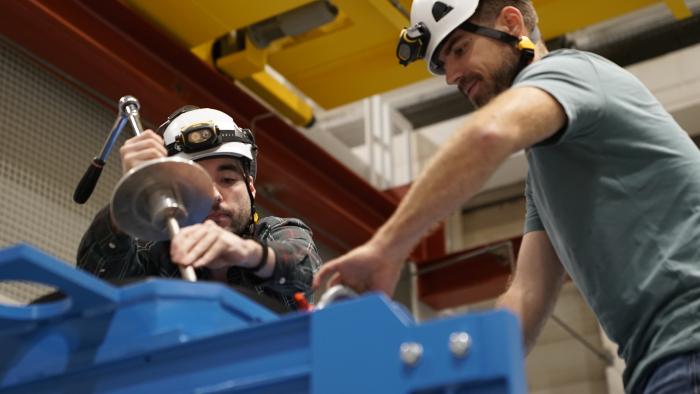
Collider-experiment interface: how engineers are preparing for manoeuvres in this highly restricted region of the HL-LHC
Engineers have started to use a life-sized mockup, named GALLUS V2, of the highly restricted region between the collision points and the tunnel at ATLAS and CMS, to test alignment and handling procedures.