
Ten thousand magnets later | CERN Courier
Heike Kamerlingh Onnes first observed superconductivity in a thread of frozen mercury. A century after his death, Lucio Rossi and Markus Zerlauth trace how his discovery came to drive CERN’s colliders.
By Lucio Rossi and Markus Zerlauth in the CERN Courier
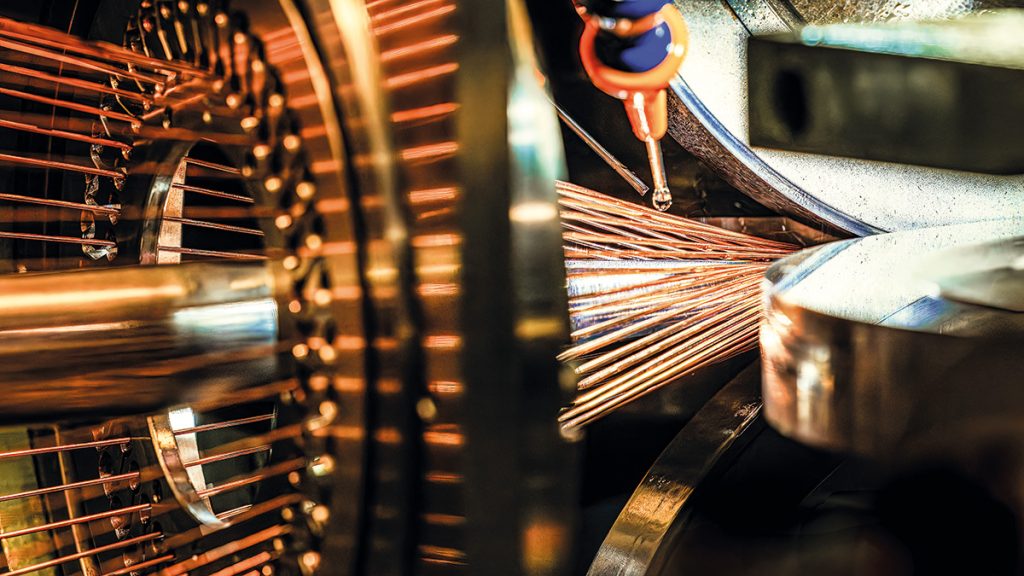
For the collider’s high-luminosity upgrade (HL–LHC), flexible lines of magnesium diboride (MgB2) will carry 10 times as much. Currents of this intensity would melt any ordinary cable. Yet these filaments bear them unscathed, for their resistance is exactly zero. Much of the reach of particle colliders rests on this fragile, emergent phenomenon: superconductivity. The man who first observed it, Heike Kamerlingh Onnes, died 100 years ago, on 21 February 1926.