
Knowing Hilumiers
Knowing HiLumiers is a project in which many members of the HiLumi LHC, past and present, were interviewed to gain an insight into the people of the project.
WP15 Integration & (De-)Installation Bees
WP15 bees constitute a whole, i.e. they integrate, in all its meanings. They take care of completing a whole with the future components.
What whole? The HL-LHC. How? By coordinating and deciding how to integrate the various technical equipment, intended to be installed in the accelerator.
These bees are also in charge of ensuring the harmony between the different engineering choices and the HL-LHC, always keeping in mind the technical objectives, the schedule and the cost.
Find out more about Integration and (De-)Installation
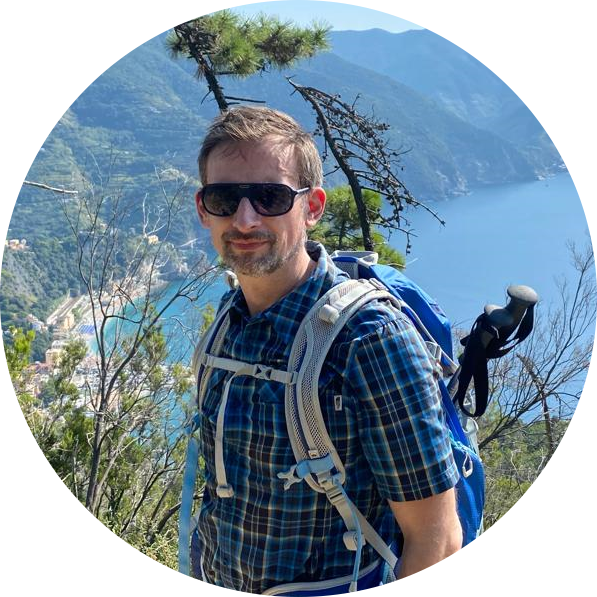
Paolo Fessia
Read
Who am I? Paolo hesitates. This could be the last question of a person’s life. It is still too soon for him to answer it, but he tries. He feels himself a person eager to discover and to learn. This curious 49 years-old Italian engineer is motivated by the fact of seeing (in the broad sense of the term) as many things that are possible.
In 1998, Paolo became a CERNie. During his last year of university, in Turin, he had a 4 months Erasmus experience at the Joint Universities Accelerator School (JUAS). Located in the French Geneva region, and very close to CERN, these seemed to be small clues about Paolo’s future scenarios. At that time, he did not know that he would end up living in that area and, what is more, working at the world’s largest center for scientific research.
The year after he presented his Master final project, he got a fellowship to be part of CERN. Once he got his engineer’s diploma, he got an extra year at CERN and, when the flame of that contract blew out, he had the opportunity to join CERN as staff. It was the time in which the production of the LHC components was, clearly, the CERN strong bet. That time was 1998.
But before moving out to Geneva, where he lives now with his family, and before studying Nuclear Engineering at Turin’s university, Paolo spent his early 19 years in Ivrea. Located in northern Italy, 50 kilometers from the capital city of Piedmont, it is a small town that had its splendor moment with the foundation of Olivetti, a big company which started producing mechanics typewriting machines.
Paolo’s eyes were able to see how this company practically disappeared and how employment opportunities went from a private enterprise factory to municipal utilities, such as the city hospital and the tribunal. These days, he does not miss much from Ivrea, where he can go back, as much as he wants whenever he wants. Paolo is not in the mood for nostalgia.
He is very happy in the peculiar Geneva. Paolo talks about being happy as if it was, in some way, having the feeling that you have been able to accomplish something that makes you feel full, spiritually full. That is why we can experience happiness by sitting alone on a coast of Scotland while contemplating the ocean or by solving technical problems with your work team.
His dreams are simple, but that does not mean his dreams are easy to achieve or that he is not ambitious. The dreams’ staircase of Paolo consists of lots of steps: one with the feeling of having participated in big challenges, another one with the feeling of having contributed to the knowledge of humankind. Another one hosts his personal growth and the acquaintance of new people and more ways of living, and, one of the current last ones (could be called, “the father step”), shelters his kids finding their place in a society on which they feel happy for what they are going to be.
Although, “l’erba del vicino è sempre più verde”, it is important to refocus on ourselves and, instead of complaining about something we are finding outside, trying to understand it and taking action. We should all work on improving ourselves. Paolo does it. He continues facing challenging situations at the professional level and, personally, he walks along without fear at the border of the unknown and the things we can name.
Paolo is a man with the insatiable curiosity of children and cats and the wisdom of the tribal elders. He belongs to the old school on which every day, you learn something. And he is an exemplary student!
Irene García Obrero / CERN 2020
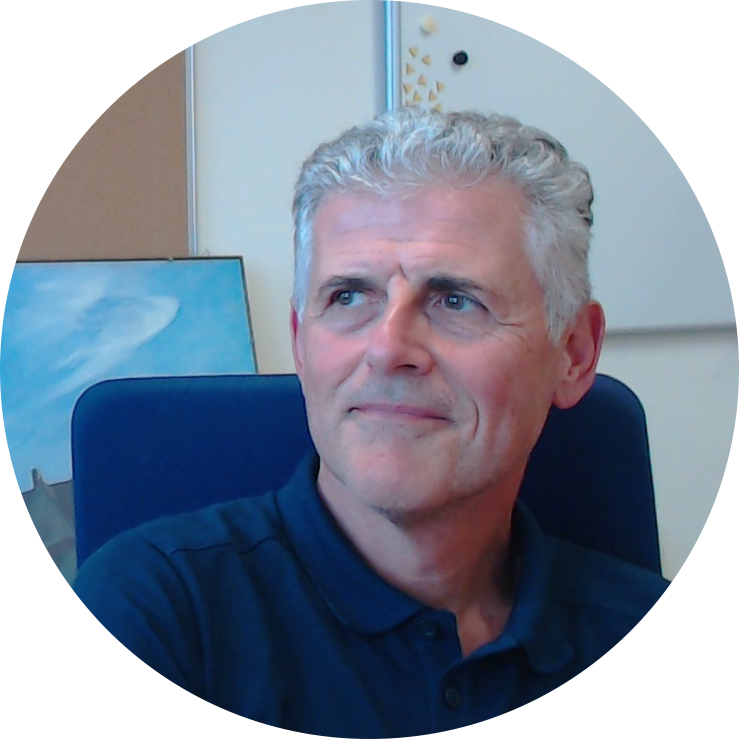
Michele Modena
Read
The word polymathy refers to wisdom that encompasses knowledge about various fields of science, art or the humanities. A polymath is an individual whose knowledge spans a significant number of subjects. Michele is one of them.
The term was expressed by León Battista Alberti, an Italian Renaissance architect who died in 1472 in Rome, where 488 years later, Michele was born. His family came from northern Italy, but they moved to the capital just before Michele’s birth. That may be why he does not really feel himself as a typical Roman.
On Michele’s night table, there is a tower of books and magazines of all sorts: from astronomy to music, philosophy, bike preparation, sailing, photography and so on.
Professionally, Michele is a mechanical engineer. During his university studies, he was a technical student at CERN and he also got there a Fellowship in 1989. After that, he moved back to Italy, specifically to Frascati, to work at the INFN-LNF on the construction and operation of an accelerator called DAFNE, and where he remained for about seven years.
When he felt that for him the most interesting part of the job was completed, Michele looked for new challenges, and he joined the High Energy Physics Laboratory at Harvard University in Boston (US), where he worked for one CERN experiment proposed by an American collaboration. He did not dislike the idea of remaining in America for a while, but a few months later, he received an offer from CERN to join the LHC construction in the Magnet Group. And, since 1998, Michele is a CERNie.
More than 22 years living in Geneva, which has a good lake, but it has little to do with the sea. Michele loves sailing, but the Lemán is far from the Mediterranean in many aspects, not only in the temperature. He misses sailing to open sea. Also, his big Italian family and the atmosphere of Rome, where you can actually smell the History. The city in which beauty lives on, standing still in time.
To Michele, beauty is something that can not be defined as a general concept because it is too much dependent by personal vision, even by the historical context. He prefers to see beauty as looking at the sources, guided by the characteristics that will provoke specific strong emotional and positive feelings in people. If those feelings are there, whatever reveals them can be considered as beautiful.
Michele’s parents and grandparents used to say that “le vie dell’inferno sono lastricate di buone intenzioni” (the road to hell is paved with good intentions), closely related to this other proverb: “il diavolo è nei dettagli” (the devil is in the details), like in this journalistic profile. Every time he hears them, he suspects again that these sayings are timeless and, the vast majority of the time, right. That is why, perhaps, we should drive to a bit more humility or modest attitude when we dream big. That is Michele’s recommendation.
He wishes that, as an engineer at CERN, he could continue to have interesting jobs, like those that he has been lucky enough to experience so far: he is not someone afraid of changes. In Mémoires d’Hadrien, written by Marguerite Yourcenar in 1951, Hadrien, the emperor of Rome, aged, isolated and with a heart disease, tells to his grandson, the future emperor Marco Aurelio, that his first homelands were books. Michele’s would be his books and magazines.
This Renaissance man, this homo universalis, who dreams of having the time to fully read those magazines, which are like a lighthouse on his night table.
Irene García Obrero / CERN 2020
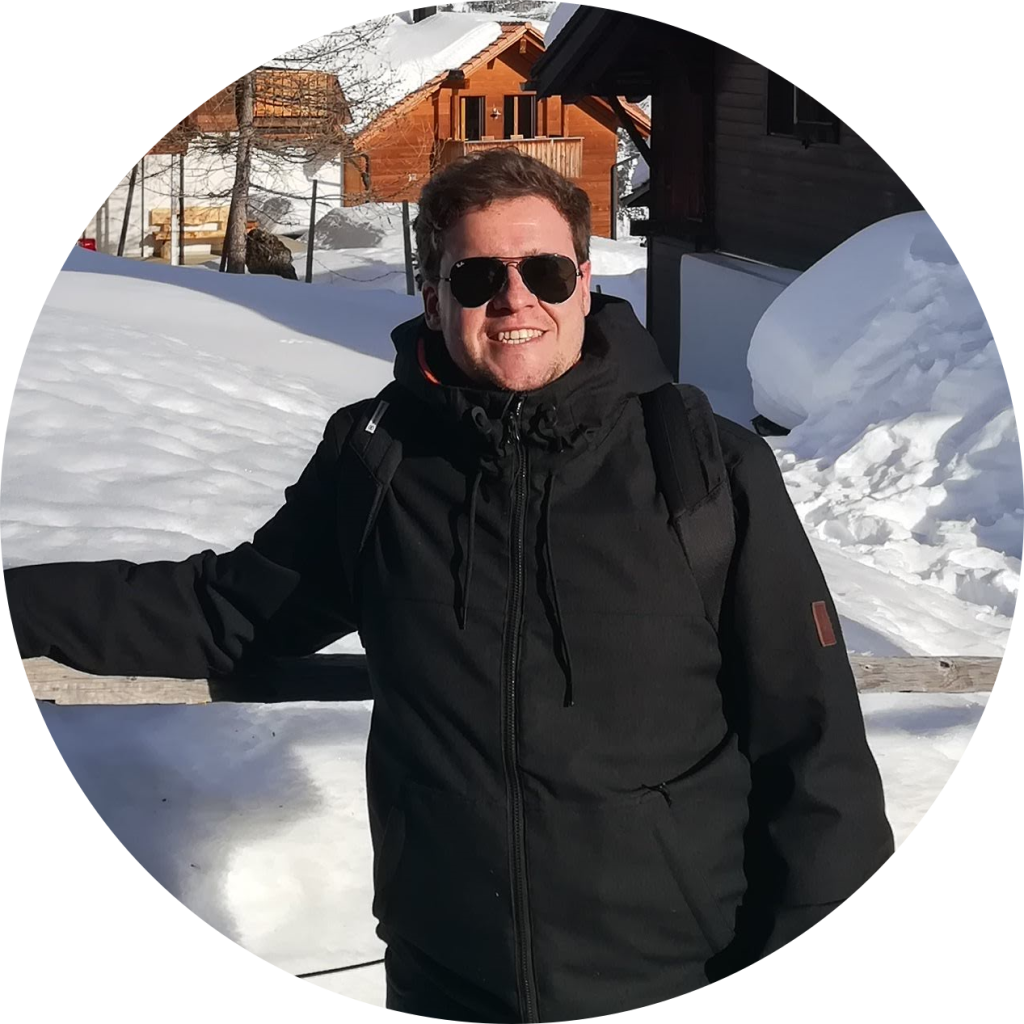
João Oliveira
Read
The child that was afraid to forget any of his 60 cousins’ names. The child that saw his grandmother, always saving money for her loved ones’ future. That child was the first one, in the lifetime of the family, to attend university. That child is now a mechanical engineer who works at CERN.
Grão a grão, João is fulfilling his life’s backpack. He is a 27-years-old curious guy, eager to learn as much as possible. He loves to travel and to cook, also Science and History, and all their possible combinations.
He is from Lisbon, onde o mar se acabou e a terra espera. João has always lived in the Portuguese capital, where he studied, both bachelor’s and master’s degree in Mechanical Engineering at the Instituto Superior Técnico (IST). He was a very active piece in the student community, participating in a lot of projects and, sometimes, coordinating and organizing them. A master behind the scenes.
Also in Lisbon, João met Kauanna, his girlfriend. They have been living in different countries since he started working at CERN, in October 2017, almost 3 years ago. With no doubt, this is one of the toughest parts of emigration.
That autumn, he moved to Pays de Gex, where he is very happy, working with a united team in Hi-Lumi, which, in his words, is a really fantastic project. As a mechanical engineer, in the not too distant future, he would like to be more connected to product design, closer to the industry.
In his daily adventures, João is surrounded by beauty. He finds it in the shape of fun and excitement. Also, in the variety of cultures and their common points, where we realise that we are not so different from each other.
The birth of the www at CERN or the recent rocket launched by Elon Musk’s company, SpaceX, are other examples. It is this type of humanity achievements that João finds beautiful because, to him, beauty is to see that people connected are able to achieve extraordinary objectives.
A goal for us? João does not hesitate: we should improve the life as we know it and leave a mark on humanity. Everything that makes us what we are is up to us. It is up to the environment that we create, the people we surround ourselves with and the ideals that we choose to follow and to pay attention to. Isso nos baste.
João will find his own meaning on life. He will continue to face challenges, increasingly complex. And he will success and overcome them because, as José Saramago would say, sempre chegamos ao sítio aonde nos esperam.
Irene Garcia Obrero / CERN 2020
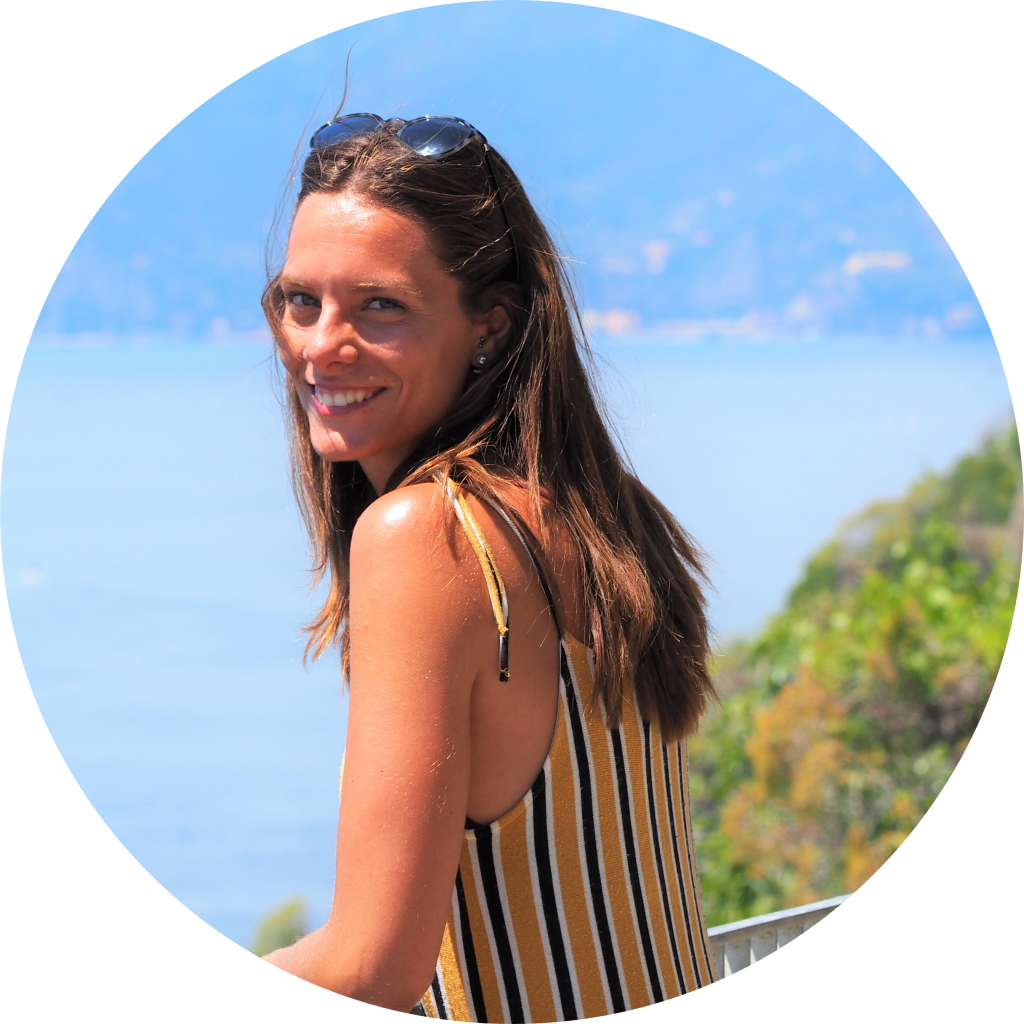
Mariam González
Read
In the centre of the capital. At the most crowded and congested spot in town, where people only know the rush and the sky is greyer. “Pongamos que hablo de Madrid”, where Mariam lived until she came to work at CERN in early January 2017.
She studied aeronautical engineering at the Polytechnic University of Madrid, and she also did her Master’s degree in aerospace systems there. Shortly after, she exchanged the crowded streets of the Spanish capital for the peace of mind, the noise of the cars horns for the birds singing. The tiny nature concentrated in the Retiro and Casa de Campo for the immense lac Lemán and the gleaned Jura mountains.
Mariam is so glad with her decision that she hardly misses anything from her city of birth (well, just the people, the food and the sun). She adapted very quickly to this countryside life. Seasonal sports were very helpful: skiing, snowboarding or raquettes during the winter, and cycling, trekking or swimming in spring and summer. Outdoors activities that were unthinkable in Madrid.
Although she does not consider herself a dreamy person, Mariam is content to be as happy as possible every single day of her life, or at least, to try it. But, what makes her happy? To keep growing, personally and professionally, as well as enjoy the little things that happen around her. It does not matter if they are good or bad.
Her parents taught her that “al mal tiempo buena cara”, and it has really helped Mariam at some points in her life. In The Gods themselves, Isaac Asimov wrote that “there are no happy endings in history, only crisis points that pass”. Better to face them with a good attitude, or with our best smile.
Mariam loves science fiction movies and literature: the futuristic landscapes and conspiracies. Although she is not a pure scientist, she is a key part of a huge scientific project because, together with people from other disciplines, engineers at CERN make scientists’ dreams come true, and we all know that “with great power comes great responsibility”.
The needs and the priorities change over the life, and that is why Mariam will redefine her idea and feeling of happiness. Nothing new under the sun: it is not what used to make her happy either that makes her happy now. The Friends, who live in neighbours apartments above Central Perk, know a lot about this, about growing, about life.
Asimov also wrote that “to succeed, planning alone is insufficient. One must improvise as well”. Perhaps, that is why Mariam prefers not to make plans for the future and let herself go. She is not in the past either, not in the mood for nostalgia.
New beautiful people and life experiences will get in her path, and Mariam will always welcome them with open arms and her best smile.
Irene Garcia Obrero / CERN 2020
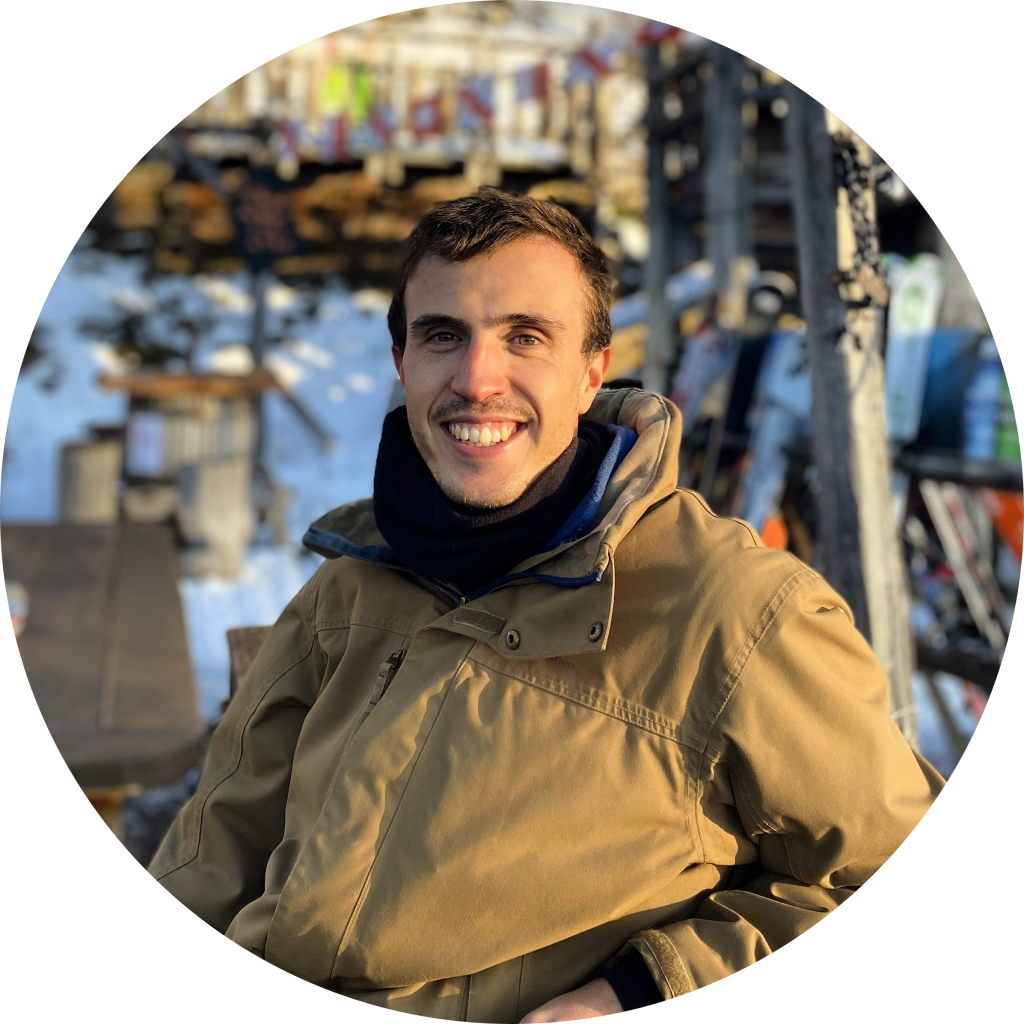
Miguel Mendes
Read
Sunsets in Portugal are special. They are different and they wrap Miguel’s thoughts if someone asks him about missing something, about saudade.
This aerospace engineer was born and raised in Lisbon, but he spent a lot of time away from the capital. Both his parents come from the inside of Portugal, from rural areas located in Santarém, 100 km northeast of Lisbon. Throughout all his life, specially throughout his childhood, he was regularly going back to his grandparents house. As intermitências da infância. The summers were also a time to taste there, helping their grandparents in the fields.
He likes to make clear that he is not a pure city person and that is important because when clarifying something, we focus on lights and shades. Miguel always says that he is made of pieces from the people that he loves and from the people that like him. He feels himself as an individual who strongly depends on his loved ones. He is a determined person and, why not to say it, sometimes stubborn, as we all are.
Since October 2017, Miguel works at CERN. He is part of the Project Office of the HL-LHC Integration and (De)-installation group. Before the take-off of his professional career, Miguel studied Aerospace Engineering at the Instituto Superior Técnico (IST) in Lisbon, and a double master’s degree, “Flight Dynamics & Control and Avionics”, between Lisbon (IST) and the Netherlands, at the Delft University of Technology.
It may happen, that a regular Thursday morning, while teleworking, someone asks you, who are you? And although it looks like a very deep question, you end up answering it. Miguel considers himself as a regular guy in many aspects, which does not mean he is flat or boring. A regular guy trying to find his way in life with the people that he appreciates, never alone, that is for sure.
He might not believe in Karma, maybe a bit, but in Miguel’s head there is a mantra spinning around: quem semeia ventos, colhe tempestades. Bad feelings feed negativity, but also good feelings spread happiness, and Miguel belongs to this second team.
When he hears the word beauty, so many things come to his mind. Beauty can be found in love, and when he says love, he means a very broad number of things (which are not things) that go from his family, his girlfriend, his dogs Boss and Chefe, two german sheperds, also to nature, wild animals or a snowing mountain.
One of the heteronyms of the Portuguese poet, Fernando Pessoa, wrote that “a beleza é o nome de qualquer coisa que não existe”. He also wrote that “a realidade não precisa de mim” and Miguel disagrees: reality as a whole may not need a specific person, but Miguel’s reality needs him. No doubt.
Miguel still does not know his dreams, and there is no rush. As long as he does something that makes him happy, that makes him motivated to wake up, to go to work, to collaborate improving something while being involved in a team. As long as he enjoys with his dear ones, he feels good. No need to dream bigger.
There will be a place in the world waiting for him, with a Portuguese sunset and some bossa nova played in the background.
Irene Garcia Obrero / CERN 2020
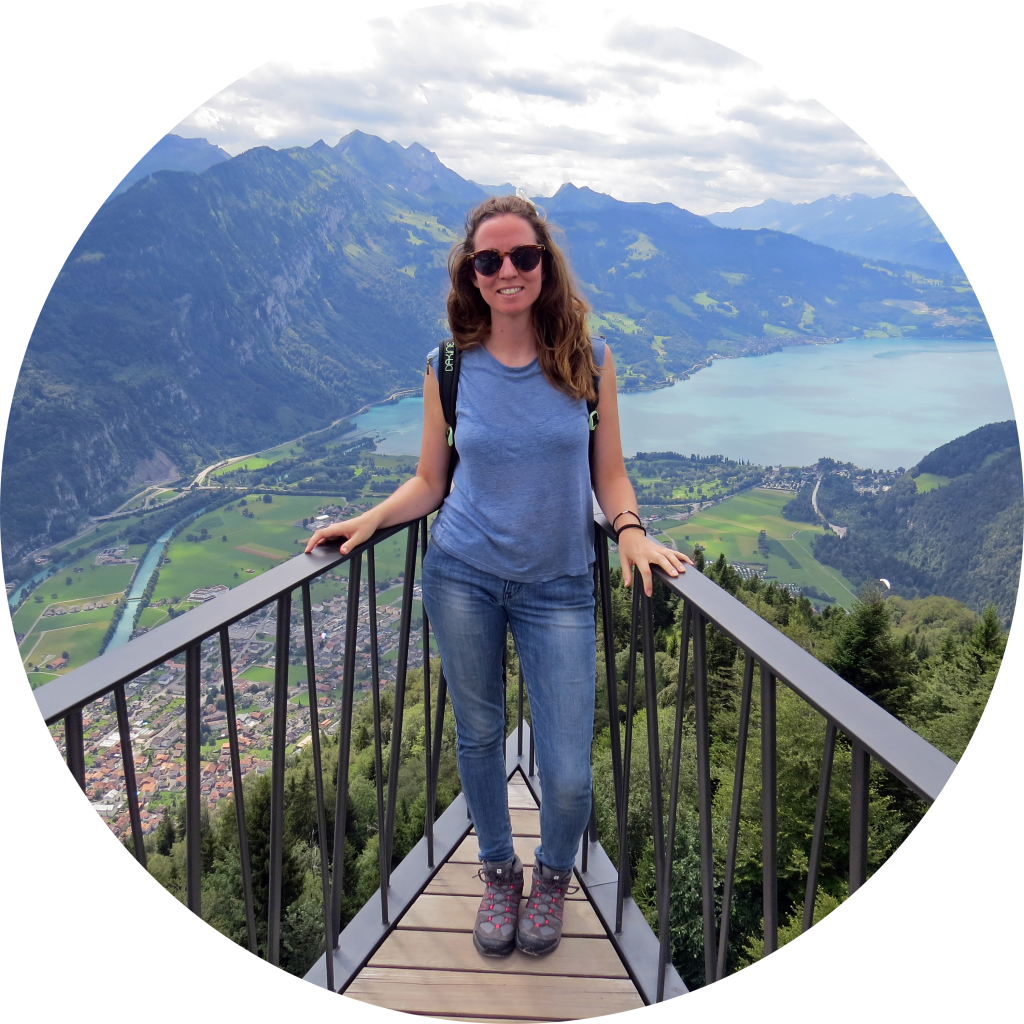
Blanca Vázquez de Prada
Read
Like Nietzsche, Blanca is a friend of the slowness. Now, from Madrid, she enjoys her own calm in the non-hegemony of the Fast & Furious. Life, like philology, demands above all to distance oneself from the rest, take time, decelerate, and our engineer lives her days on those margins.
Blanca was born at the Mediterranean’s foot, in Mojácar, a city located in Almería (Spain). After studying industrial design engineering in Seville, she worked in the Andalusian capital and also in the country’s one. Years later, she opened a door to England, and from there she jumped to CERN, where she has worked and enjoyed for five years.
She is not currently working. Her stage as a CERNie was very intense, and that is why Blanca has given herself a time of reflection, changes and rest. One way to avoid, in Nietzsche’s words, “the age of the rashness, the indecent and sweaty rush that aims to end everything immediately.” That age, which is ours, which is the Work’s one.
From that stand-by terrace, our engineer takes a look at the most special memories of that time. The disconnection from those yoga classes, which started with four cats in a park in Saint-Genis-Pouilly and grew to full capacity at CERN itself. The sweet Geneva dance academy that kept her in touch with contemporary dance that she has practiced since childhood. And, of course, those rides in a white cinquecento singing sevillanas loudly, like someone celebrating a goal in the last minutes of the game. An oasis within the High Level and the international ties.
That relaxing doses did not occur in solitude. The friendships that Blanca forged at CERN still accompany her, and she speaks, smiling, about the illusion with which they work, about their brilliant minds and their big hearts. She well remembers how excited she was when she arrived to CERN. She felt like a little girl again. It was difficult for her to shrink her smile from ear to ear when, ready for taking the photo for the access card, she was told not to smile that much. How to control so much emotion?
During her five years as a CERNie, Blanca was part of several projects. She started in civil engineering and, later on, she went to do a more mechanical design, an integration design, within the HiLumi team. She made sure that everything fit and that it was in accordance with the project’s requirements. Blanca was the link, the smiling piece that brought together the work of the different teams and departments.
She believes that it is important to find a balance between the personal demands and the enjoyment of the experience to make the most of each coffee and conversation with other CERNies, those more or less random beings who are the most beautiful things in this place. For Blanca, the beauty was in the mix, in the diversity that fitted everything, in the small big family that CERN is.
Blanca dreams now of breadcrumbs, no big loaves of bread. To engage every little wish in her daily life is enough. Go back to work? Yes, but only from a perspective of calm and serenity, because Blanca is a friend of the slow reading of life and, as Nietzsche wrote in her Aurora, reading well is reading slowly.
Irene Garcia Obrero / CERN 2020