
Knowing Hilumiers
Knowing HiLumiers is a project in which many members of the HiLumi LHC, past and present, were interviewed to gain an insight into the people of the project.
WP3 IR Magnets Bees
There are magnets beyond those we put on our fridge. Electromagnets, superconducting magnets, dipole magnets, quadrupole magnets…
At the LHC, there are more than 50 types of magnets, in charge of keeping the particles inside complex paths.
The bees working in this cell are responsible for the new hilumi magnets that need to be more powerful to focus the particle bunches just before they collide in the experiments. They are in charge of their design, construction, interconnection and installation in the accelerator. They monitor the whole process, detecting the failures that arise and solving them.
Like magnets, the WP3 bees have two poles, one at the end of each wing. Every day, they join differently to attract each other, and thus also attract their goals.
Find out more about IR Magnets
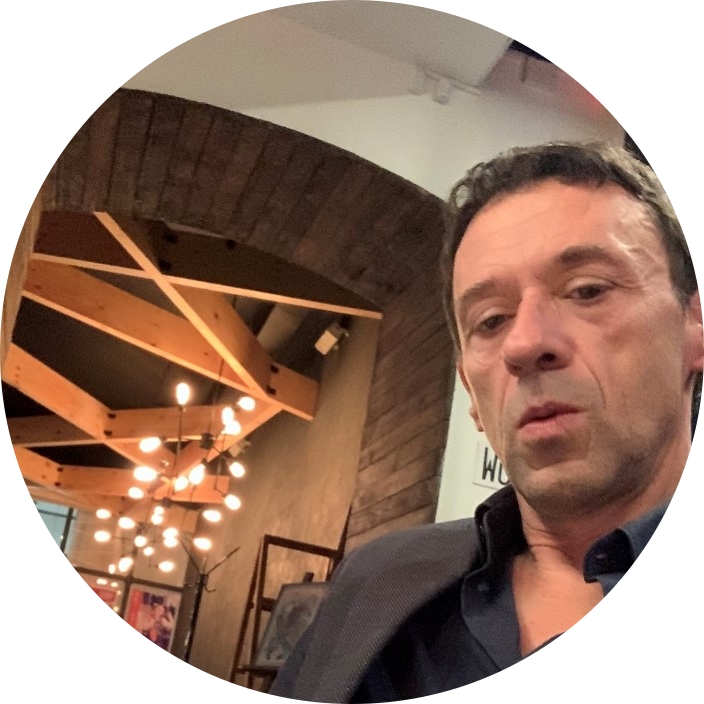
Ezio Todesco
Read
Ezio Todesco. Bologna, Italy. 1965. Ph. D. in Physics, in Mathematical Physics. Currently working at CERN. Living in Geneva, Switzerland. Synthetic is the way he likes things.
It was in 1989, when Ezio joint CERN for the first time as a technical student. That was before his Ph. D. Later on, the same year that Guns, Germs and Steel, from Jared Diamond, won the Pulitzer Prize for general nonfiction, Ezio became a real CERNie. Now, more than 22 years later, he remembers fondly a winter day in which collaborators from Pakistan (who were not 20, not that young) started to play in the snow because it was the first time they saw it.
He still misses the Italian coffee and the beauty of the buildings, that beauty that Ezio also finds in Stanley Kubrick films, in understanding things and in not understanding things. If he could have a bookstore with just two fiction books, he would be accompanied by The Count of Monte Cristo, from Alexandre Dumas, and The Mysterious Island, from Jules Verne. A synthetic representation of the 19th century optimism, the power of science and culture.
“Of course we are much more than a book. Of course the book is not yet written. It is up to us to write it”. Ezio does not take Alessandro Baricco’s quote in the most literal sense. He prefers the verses from Stefano Benni, an Italian writer, poet and journalist who was also born in Bologna.
“Prima o poi l’amore arriva”, and that love, which arrives to us whenever it wants to, could be the beauty and the pleasure of working. As the wife of his former group lider, who is now retired, said: “Every day when he woke up, he was happy to go to work”.
That is really moving for Ezio. Not thinking about Mondays mornings as hell, and Fridays evenings as the prelude of freedom. Instead, feeling that every day working at CERN is a privilege, like a pleasure trip.
Irene García Obrero / CERN 2020
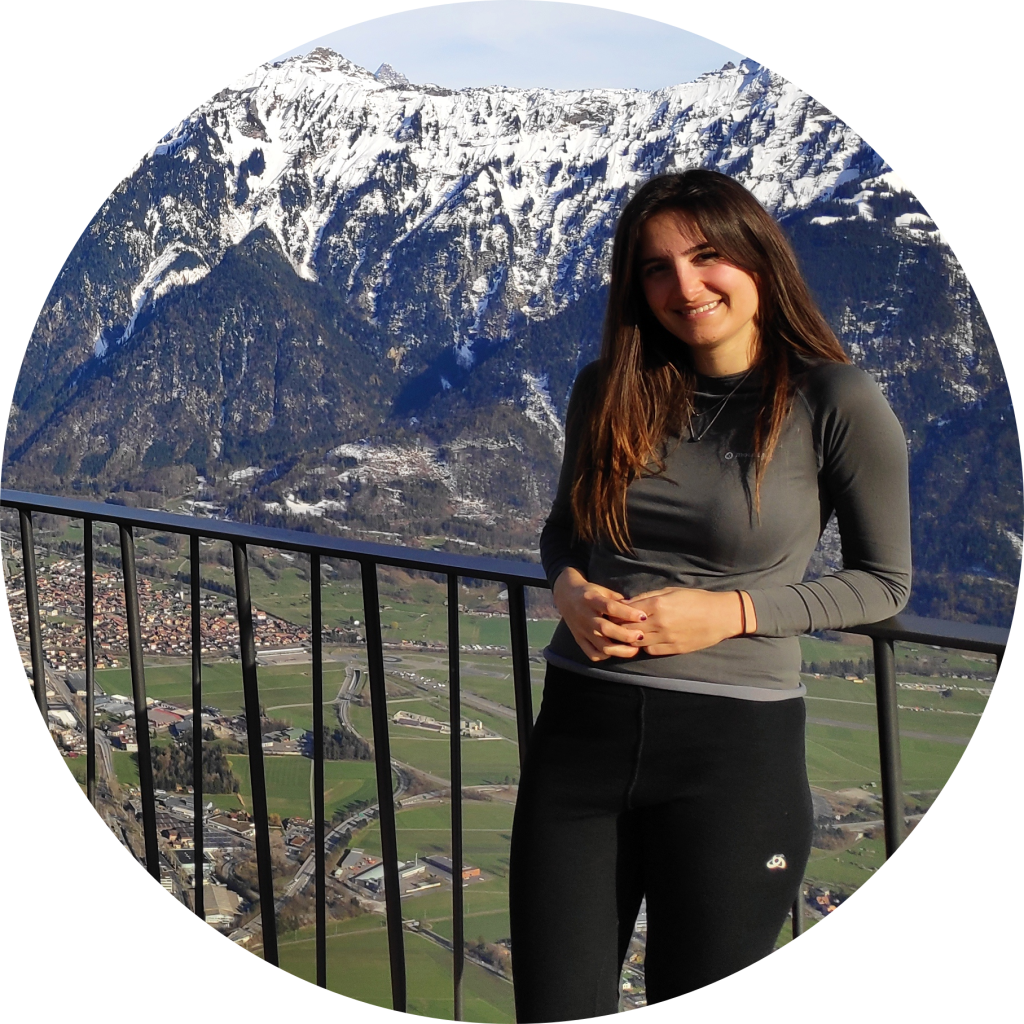
Mercedes Rebollo
Read
From Fregenal, a small village located in Extremadura (Spain), Mercedes swapped the small hills and ravines of Sierra Morena for a place nearby the highest mountain range in Europe. She also changed the short walking distances of Seville for the daily bike rides from Ferney-Voltaire, where she used to live, to CERN.
On her way to CERN, where Mercedes has been working until August 2019, she had to cross large fields that most of the time were full of Milka cows. But, without a doubt, it is another kind of animal, the one that she misses the most from that time. Those Aristotelian zoon politikón that surrounded her. Mercedes had the chance to work with a very nice team, to know lots of women leaders and to learn from the people she met. But she also misses those individuals that she met outside the CERN bubble.
It was around September 2017, at the beginning of her days as a CERNie, when Mercedes and some friends of her decided to set up a woman football team. By that time, just a rugby female team existed, so they shaped a football one, which today is called Scrambleg Leggs.
Besides football, she plays the keyboard. Mercedes decided to buy one so that she could keep practising and her piano notions did not get oxidized. This engineer never stopped being in touch with arts and humanities. Reading Carlos Ruiz Zafón and fantastic literature, painting, writing and playing music have always come along with her.
CERN changed Mercedes at many levels. Becoming a CERNie is a very nice time to leave shyness and prejudices behind. She worked there as a Quality Assurance and Asset Management Engineer, and she was a one-woman band CERNie. A multitask professional. To her, CERN was her first experience abroad. It was also the first time she got in touch with other languages. Now, she is able to dream in Spanish, English, French and Italian.
It is in life after CERN, when you realize all the big changes that you experimented there. It happens once you come back to your place. Her experience at CERN made her think that she is able to do more things than she thought before. You get more ambitious, but in the good sense of the word.
With 27 years, Mercedes is studying her second master. The first one was a Masters in Industrial Engineering, in Sevilla, where she moved in 2011 to study her university degree. The current one is a Master in “Energy efficiency industry, audit and building certification” because, in the short-term future, she would like to be part of projects related to energy efficiency and environment protection.
Last Christmas, Mercedes went into an entrepreneurship adventure together with three friends. She is a restless woman. She does not stop.
In The shadow of wind, Zafón wrote that: “El destino no hace visitas a domicilio, hay que ir a por él”. And, for sure, Mercedes is constantly heading for it.
Irene García Obrero / CERN 2020
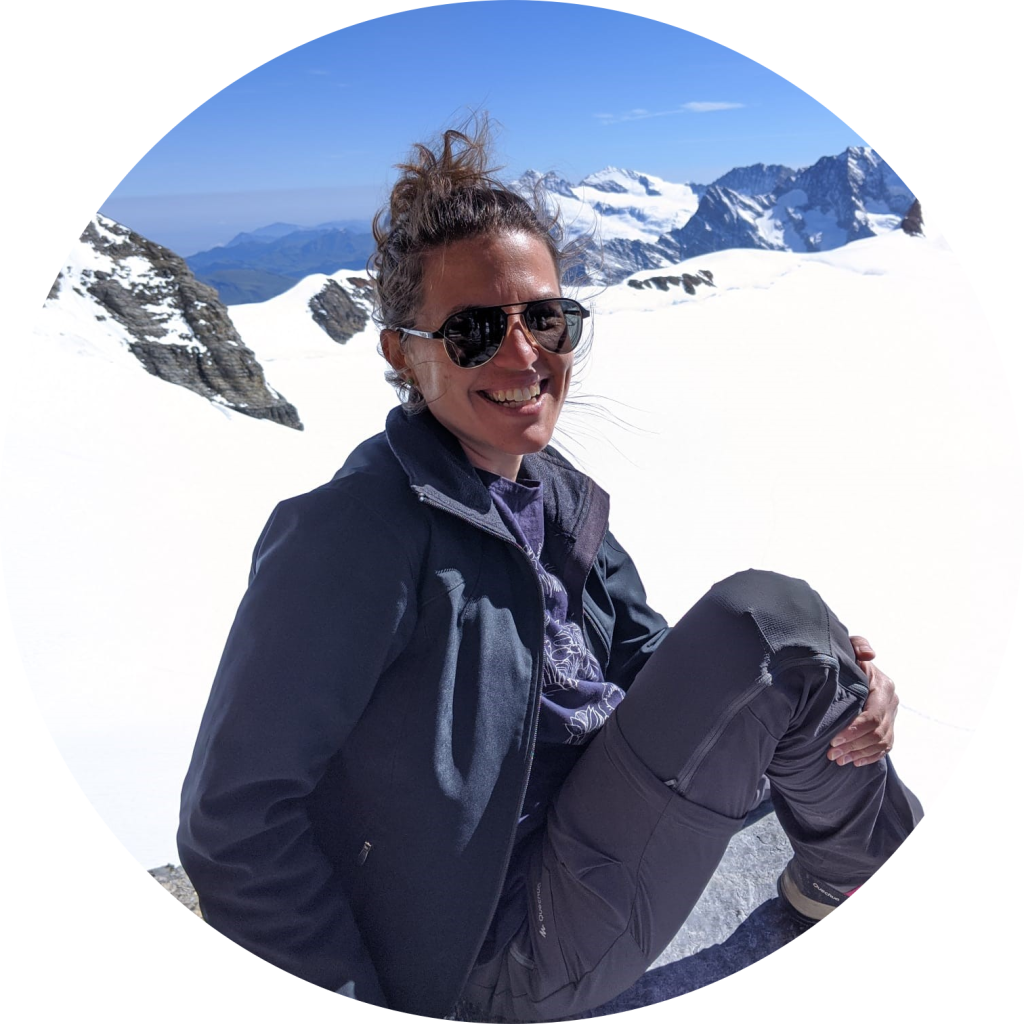
Beatriz del Valle Grande
Read
During her last year of high school, Bea went to Durham (England) to improve her English during the summer. That experience completely changed her aspirations, and with them, the course of her life. Bea, who was born in Plasencia and grew up between that “Perla del Valle del Jerte” in the north of Extremadura and Malpica del Tajo in Toledo, realized that she wanted to live abroad.
She kept this in mind, and in her heart, for many years. After high school, she moved to Madrid to study aerospace engineering at the Polytechnic University of Madrid, and during her last course, she did an Erasmus at TU Delft, in the Netherlands, the country where Beatriz’s internship mutated from a six-month chance to a five-year work experience. Her much-desired life abroad had begun.
After working at Moog Bradford and at Huisman Equipment, Bea arrived at CERN, but it was not linearly planned: together with her boyfriend, who is from Mexico, they wanted to try their luck in another country, France, but due to visa issues, they ended up in Switzerland. Bea got a fellowship in 2016, and she was a CERNie for three years, the person responsible for managing and executing a project that irradiated insulation materials at low temperatures to characterize them to be used in superconducting magnets.
Her colleagues are what she misses most. Also her Friday zumba teacher, Rachel, and the people from the Women in Technology Mentoring Programme, where she met her mentor, who is now a close friend. Bea was always surrounded by good vibes. She was also going to a drama course at the Université Populaire of Geneva Canton, and she loved reading in the tram on her way there.
CERN gave her the opportunity to meet people from other countries, with very different cultures and ways of thinking, something that expands anyone’s. Besides a problem-solver, Bea is a cheerful and curious woman, always looking for new things, which is why she enjoyed her stay at CERN, a place that she thinks is unique for what is done in it, for the people who daily shape it.
Bea was clear that she wanted to continue in this region because she loves nature. So, after CERN, she started looking for a job around here, and it was in the middle of the Coronavirus lockdown that she got it: she works now as a quality engineer in a space company in Nyon, 35 km from Geneva, also bathed by the Lemán.
She does not want to know anything about the future. Life has shown her that no matter how much you dream, there are other trains that will pass in front of you. As John Lennon said, and his father always reminded her, “life is what happens to you while you are busy making other plans”. Bea simply prefers to go with the flow.
Irene García Obrero / CERN 2020