
Tag: Collaboration
-

Entering a new chapter for the HL-LHC project | home.cern
Entering a new chapter for the HL-LHC project By Oliver Brüning and Markus Zerlauth (CERN) on home.cern More than 200 participants gathered online at the 11th annual HL-LHC collaboration meeting to take stock of CERN’s flagship project as it starts taking shape on an industrial scale. Read on home.cern Read more news
-
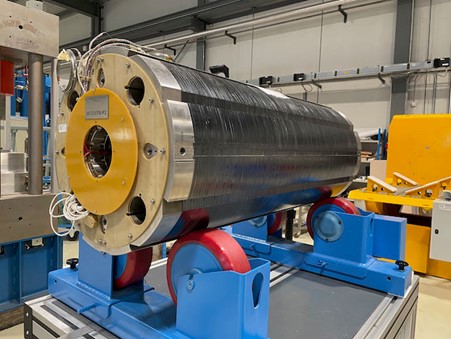
MCBXFB magnets ready for series production after successful design iteration
MCBXFB magnets ready for series production after successful design iteration By J. C. Perez and E. Todesco, TE Dept, MSC group, HL-LHC (CERN) In the HL-LHC machine, to be installed during the third long shutdown (LS3), the family of magnets named MCBXF (see figure above) will be located on both sides of the ATLAS and
-
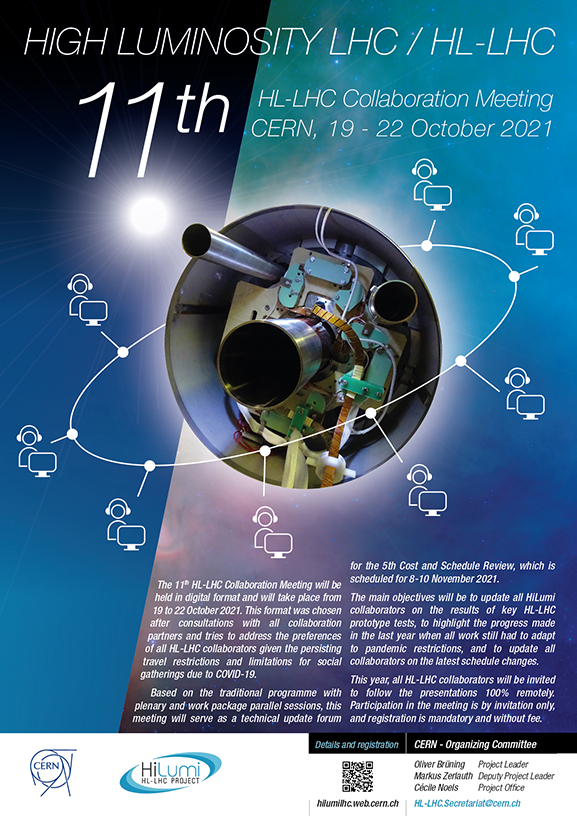
11th HL-LHC Collaboration Meeting, 19 – 22 October 2021
11th HL-LHC Collaboration Meeting, 19 – 22 October 2021 Following the 10th HL-LHC Collaboration Meeting held partially by video in October 2020, the 11th HL-LHC Collaboration Meeting will again be held in digital format and will take place from 19 to 22 October 2021. This format was chosen after consultations with all collaboration partners and tries to
-
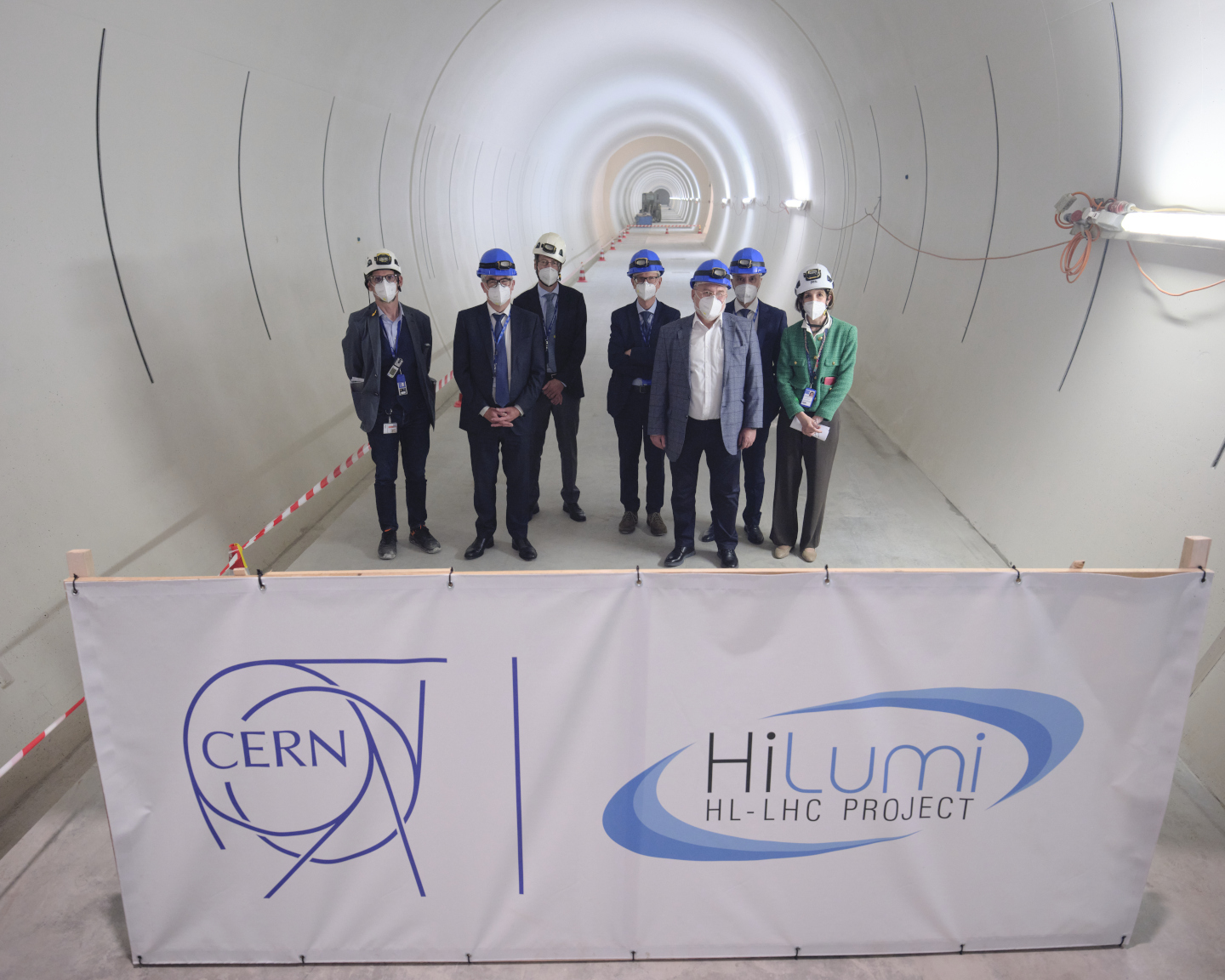
Council delegates visit new High-Luminosity LHC infrastructure | home.cern
Council delegates visit new High-Luminosity LHC infrastructure | home.cern On 23 September, 16 CERN Council delegates visited the new underground cavern at Point 1. Read on home.cern Read more news
-
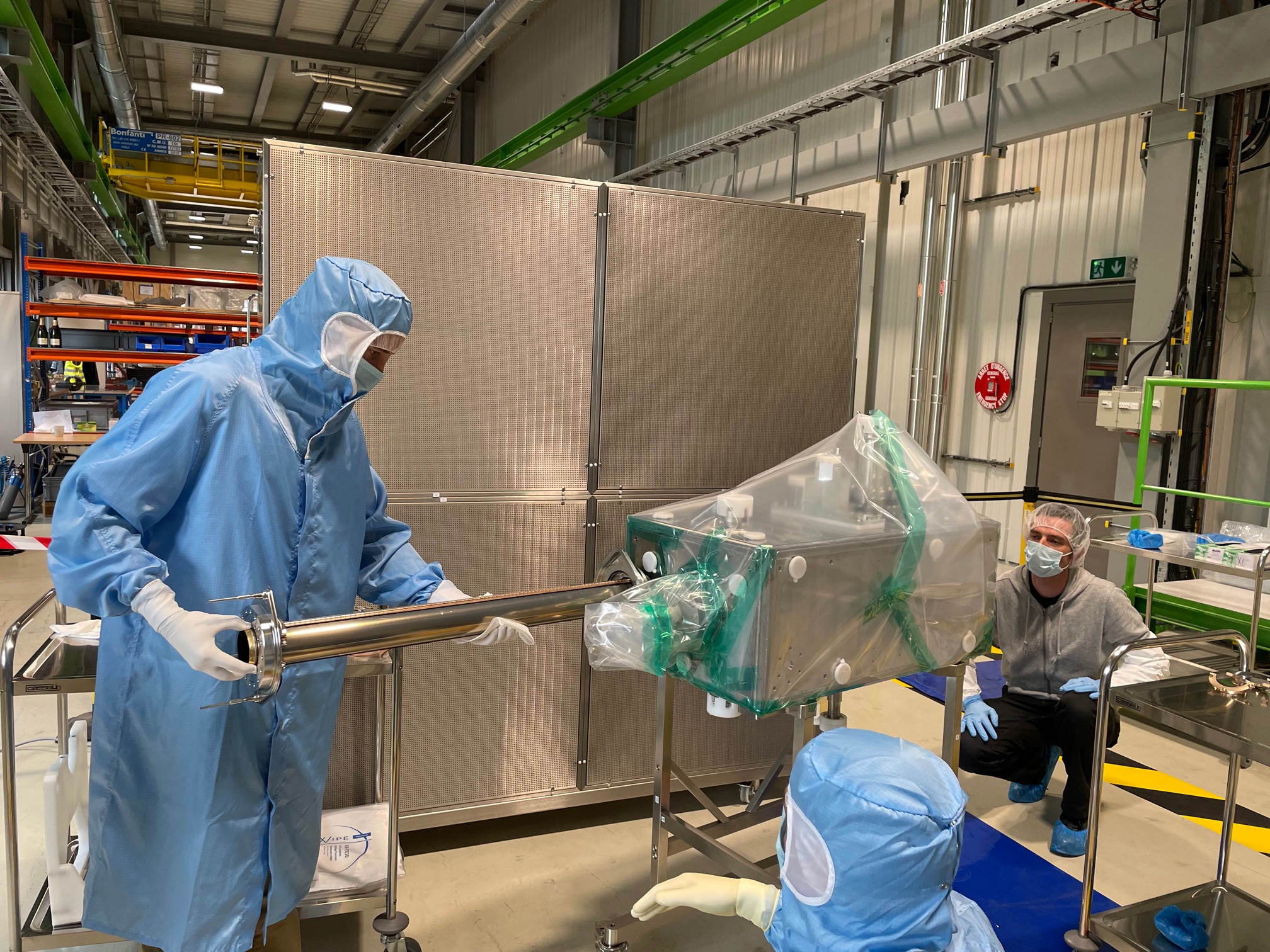
RF Dipole 2 ready for shipment to the UK
RF Dipole 2 ready for shipment to the UK By Rama Calaga, WP4 Leader (CERN) Following the very successful RF test, the RF Dipole 2 dressed cavity was equipped with a beam screen in the adjacent vacuum chamber that runs parallel to the cavity inside the Helium tank assembly. The fully assembled RF dipole 2
-
MQXFA05 and MQXFA06 vertical test results
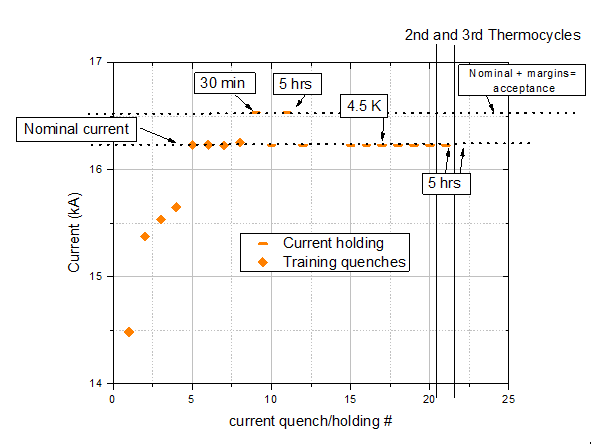
MQXFA05 and MQXFA06 vertical test results By Maria Baldini (Fermilab) The US Accelerator Upgrade Project (US-HL-LHC AUP) and CERN are designing and fabricating superconducting quadrupole magnets (MQXF) for a new interaction region of the High Luminosity Large Hadron Collider (HL-LHC). The Nb3Sn quadrupole magnets operate in superfluid He at 1.9 K, providing an integrated gradient
-
Qualifying HL-LHC magnets and cavities at Uppsala University | Accelerating News
Qualifying HL-LHC magnets and cavities at Uppsala University | Accelerating News By Roger Ruber (CERN), Kevin Pepitone, and Akira Miyazaki (Uppsala University) in Accelerating News Uppsala University in Sweden has been a valuable partner to CERN since the Laboratory’s foundation. In the 1950s, Uppsala, having just constructed its own cyclotron, contributed to the development of
-
Visit and crab cavities workshop for RI
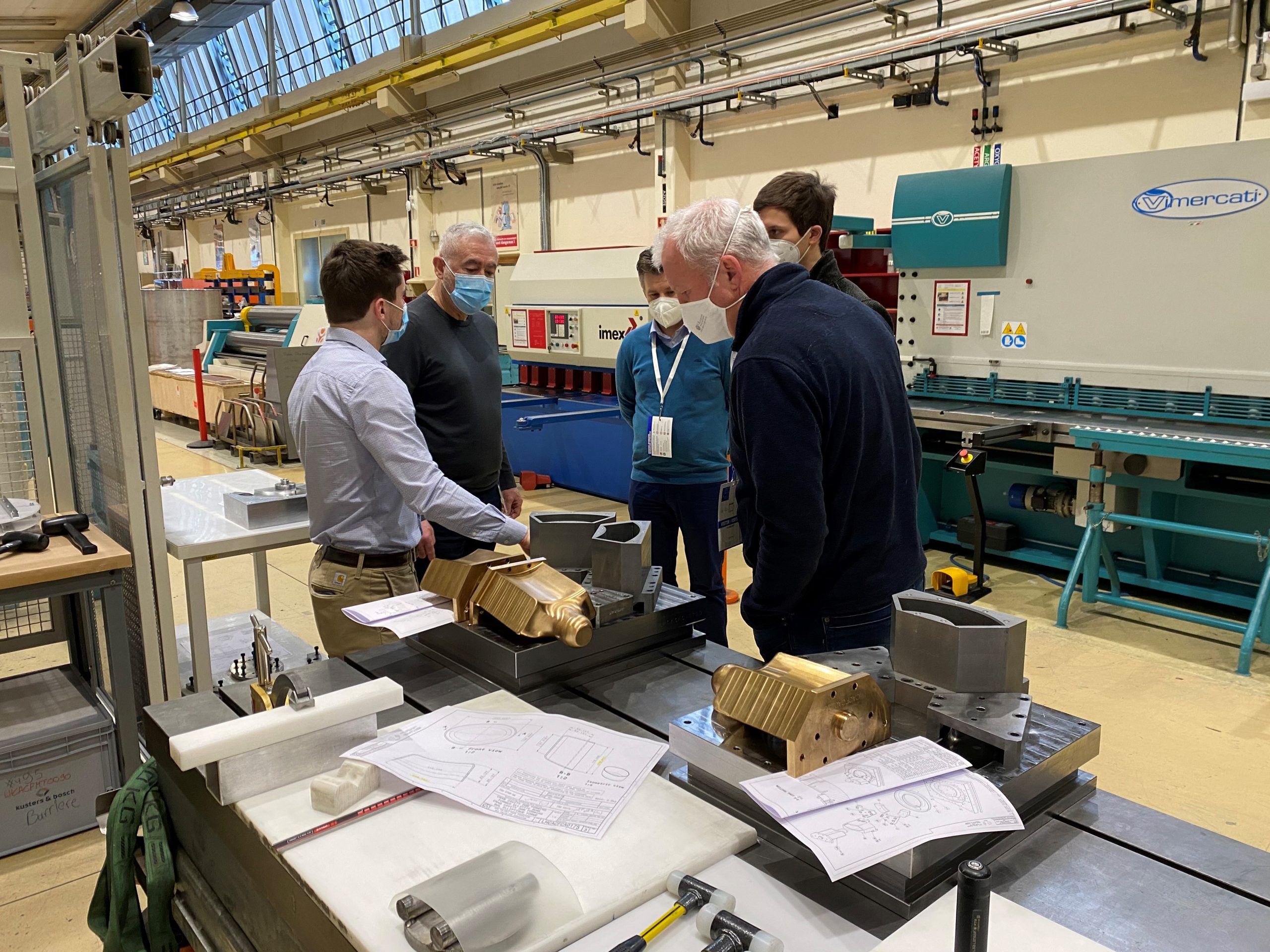
Visit and crab cavities workshop for RI By N. Valverde, WP4 RI Research Instruments, the German company in charge of the fabrication of DQW crab cavities for HL-LHC project, visited CERN on 2 February. The aim of the visit was to profit from the knowledge gained at CERN during the fabrication of prototype cavities. Numerous
-
HL-LHC and Fermilab, reinforcing collaborations
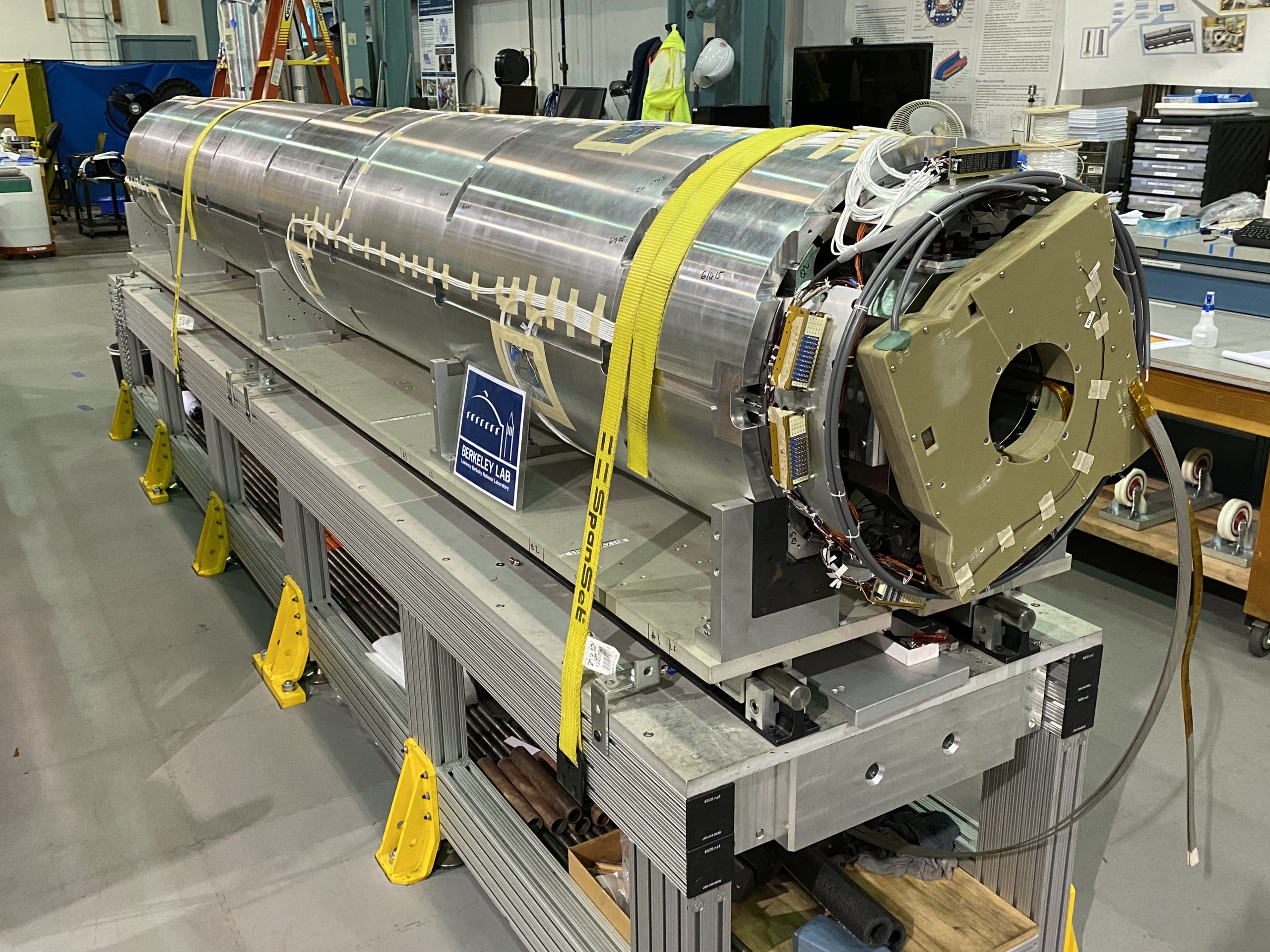
HL-LHC and Fermilab, reinforcing collaborations By Irene Garcia Obrero (CERN) Last Tuesday 23 March, the signing of a memorandum of understanding (MoU) between the Fermi National Accelerator Laboratory (Fermilab) and the European Organization for Nuclear Research (CERN) was held remotely. The agreement, which details the US laboratory’s contributions to the High-Luminosity LHC (HL-LHC) project, represents
-
First D2 corrector prototype manufactured by IHEP collaboration
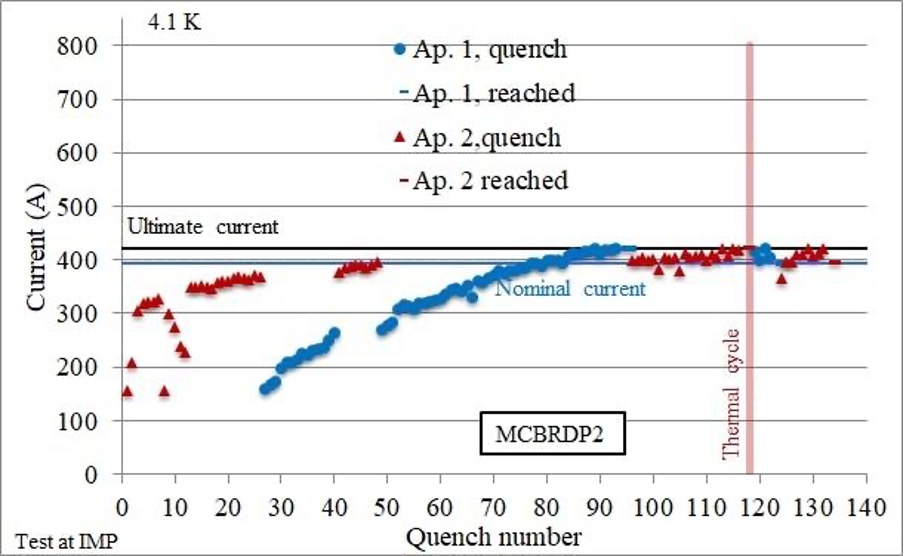
First D2 corrector prototype manufactured by IHEP collaboration In the past few months, the first D2 corrector prototype, built by a Chinese collaboration steered by IHEP in Beijing, has been completed. The magnet was manufactured by Western Superconducting Technologies, Xi’an and was tested at 4.2 K in the Institute of Modern Physics, Lanzhou. The magnet reached the ultimate field in both apertures, as
