
Tag: US-AUP
-
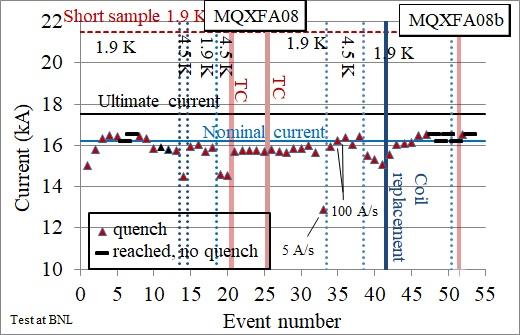
Recovery of an HL-LHC niobium–tin magnet
The successful replacement of a coil in an HL-LHC niobium–tin quadrupole magnet by the US Accelerator Upgrade Project team has showcased this crucial technology’s flexibility and cost-effectiveness, CERN News.
-

News from the Chamonix workshop
News from the Chamonix workshop | home.cern By Mike Lamont (CERN) on home.cern There has been sustained international effort and good progress on the HL-LHC magnet front. The production of the interaction region magnets is progressing well, and prototyping and production of the NbTi magnets have passed through critical phases. The INFN twin aperture D2
-
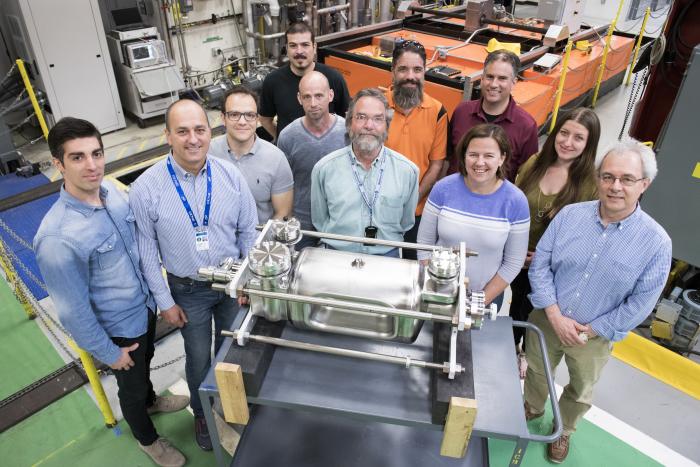
United States crab cavity program springs forward into production after successful test of prototypes | Accelerating News
United States crab cavity program springs forward into production after successful test of prototypes | Accelerating News By Rama Calaga (CERN) and Leonardo Ristori (Fermilab) in Accelerating News By Rama Calaga (CERN) and Leonardo Ristori (Fermilab) – Crab cavities are critical to increase the number of interactions. After successful prototyping and testing, the US programme
-
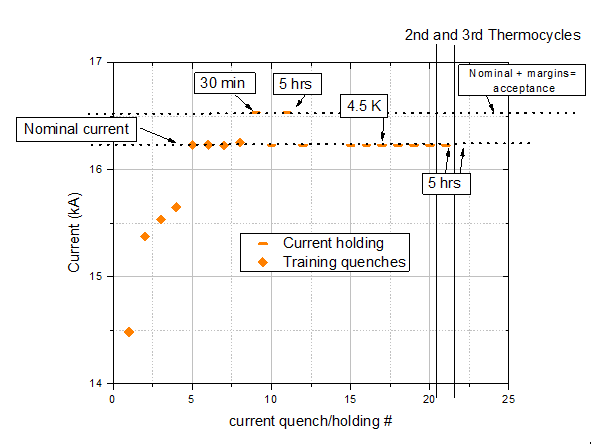
MQXFA05 and MQXFA06 vertical test results
MQXFA05 and MQXFA06 vertical test results By Maria Baldini (Fermilab) The US Accelerator Upgrade Project (US-HL-LHC AUP) and CERN are designing and fabricating superconducting quadrupole magnets (MQXF) for a new interaction region of the High Luminosity Large Hadron Collider (HL-LHC). The Nb3Sn quadrupole magnets operate in superfluid He at 1.9 K, providing an integrated gradient
-
HL-LHC and Fermilab, reinforcing collaborations
HL-LHC and Fermilab, reinforcing collaborations By Irene Garcia Obrero (CERN) Last Tuesday 23 March, the signing of a memorandum of understanding (MoU) between the Fermi National Accelerator Laboratory (Fermilab) and the European Organization for Nuclear Research (CERN) was held remotely. The agreement, which details the US laboratory’s contributions to the High-Luminosity LHC (HL-LHC) project, represents
-
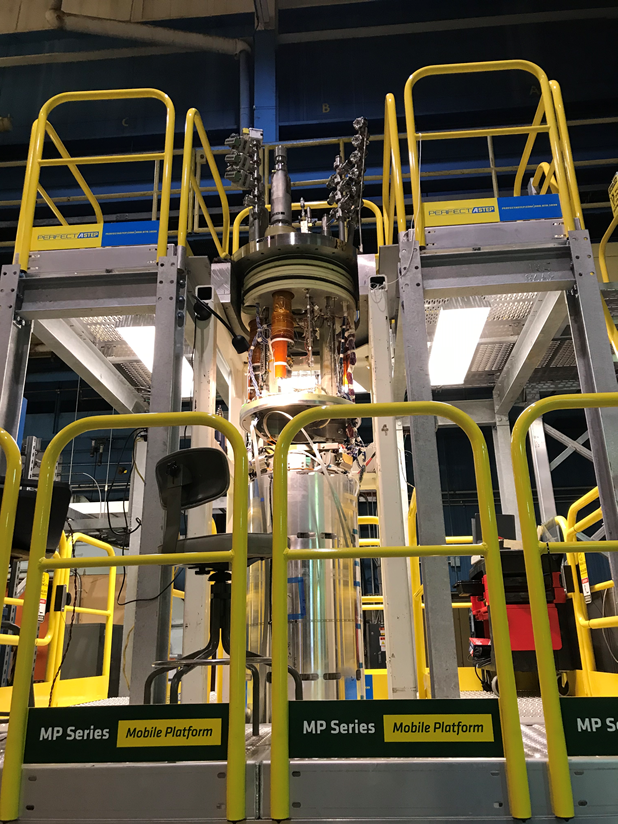
HL-LHC superconducting quadrupole successfully tested | CERN Courier
HL-LHC superconducting quadrupole successfully tested | CERN Courier By Matthew Chalmers (CERN) in the CERN Courier “A quadrupole magnet for the high-luminosity LHC (HL-LHC) has been tested successfully in the US, attaining a conductor peak field of 11.4 T – a record for a focusing magnet ready for installation in an accelerator”. Read in the
-
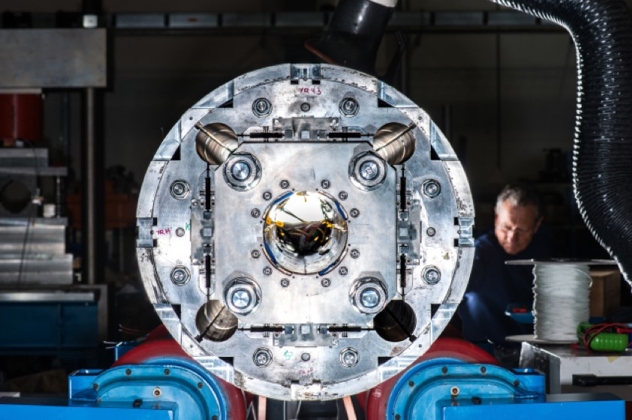
The crown jewel of the HL-LHC magnets
The crown jewel of the HL-LHC magnets The new quadrupole magnets are being developed in the framework of a collaboration between CERN and the LHC-AUP (LHC Accelerator Upgrade Project) consortium, which involves three US laboratories. From home.cern Available on phys.org Read more news