
Category: 1. Project News
-
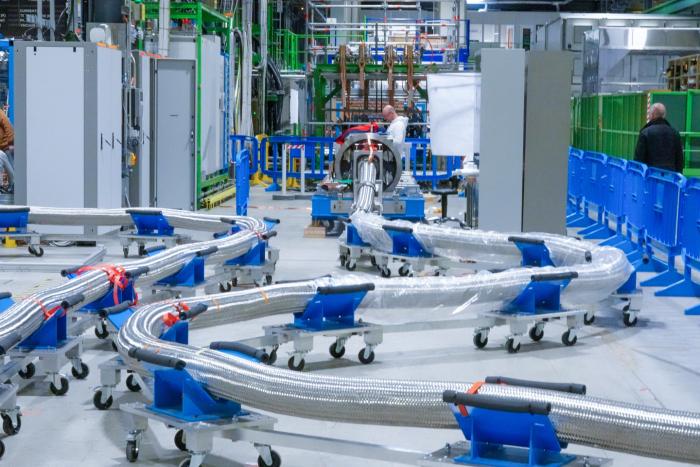
Superconductivity for sustainability: a new superconducting link for the High-Luminosity LHC
A flexible cryostat and the first series of high-temperature superconducting magnesium diboride cables will form an innovative electrical transfer line to power the HL-LHC inner triplet magnets
-
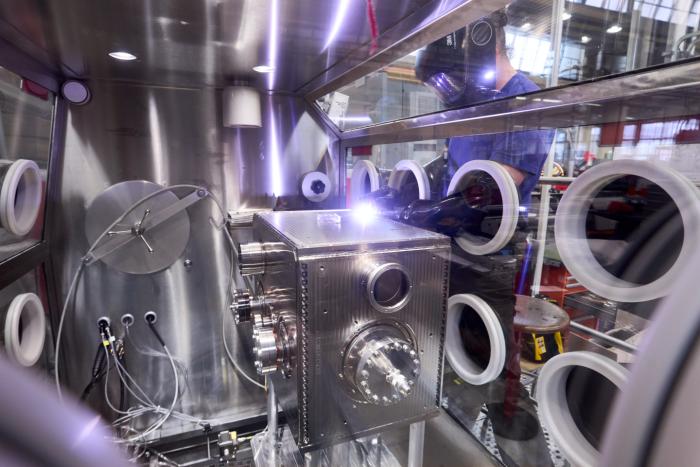
Welding of the Helium Vessel on a HL-LHC DQW Crab Cavity
A titanium grade 2 helium vessel was TIG welded around a superconducting Double-Quarter Wave LHC Crab Cavity.
-
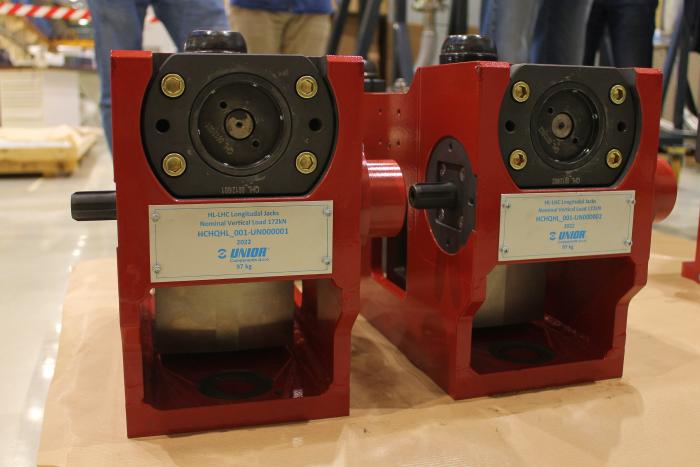
First HL-LHC jacks tested and validated at CERN
All jacks of batch #1, produced by UNIOR components d.o.o, have been validated and accepted after the Site Acceptance Tests carried out at CERN.
-
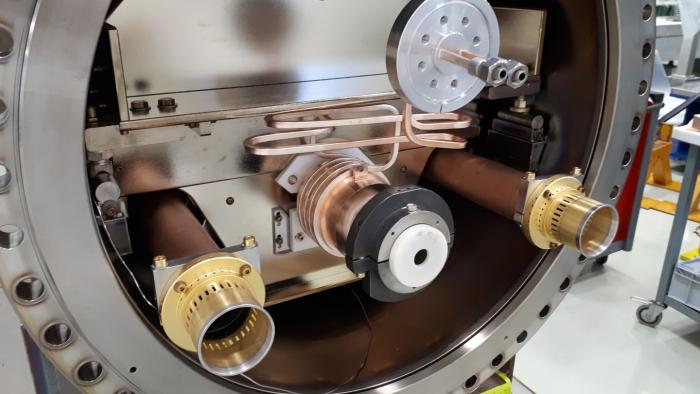
Cool Kickers for the HL-LHC | home.cern
Much of the research and development work for the High-Luminosity LHC (HL-LHC) aims to protect the accelerator’s fragile components from the detrimental effects of high luminosity,…
-
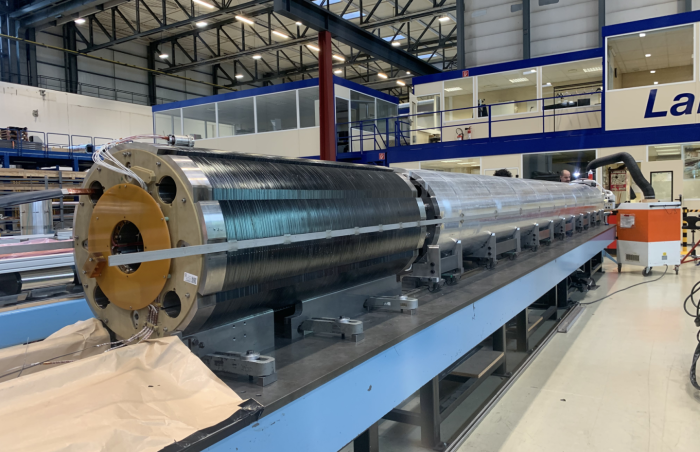
7.2-m-long niobium–tin quadrupole magnet manufactured at CERN reaches nominal current for the first time | home.cern
The 7.2-metre-long version of this vital HL-LHC component reached nominal current plus an operational margin corresponding to a coil peak field of 11.5 T at 1.9 K during a test in SM18..
-
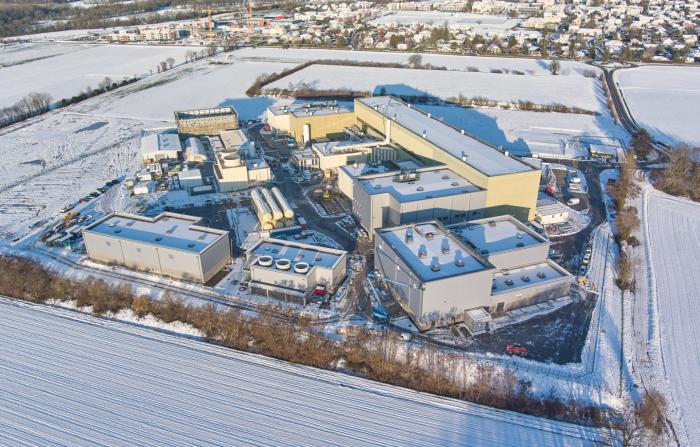
Civil-engineering work for the major upgrade of the LHC completed | home.cern
CERN celebrates the completion of the civil-engineering work for the High-Luminosity LHC (HL-LHC), the major upgrade of its flagship collider, the LHC,
-
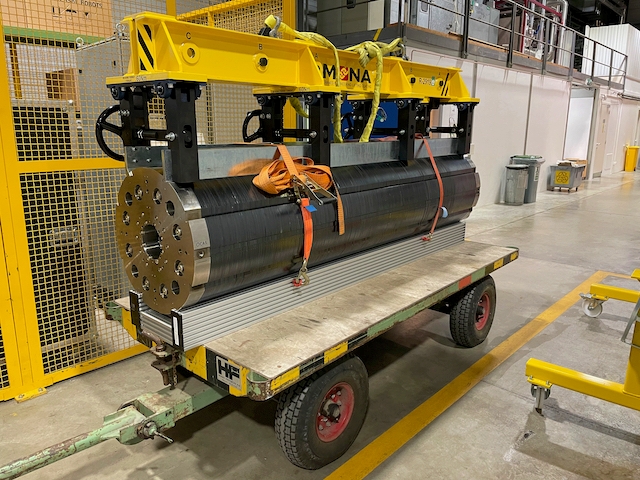
Test of the long nested dipole corrector
Test of the long nested dipole corrector By Ezio Todesco, WP3 Leader (CERN) The 2.5-m-long nested corrector prototype, named MCBXFAP1, has been successfully tested in the past weeks in SM18. The magnet reached the operational range at 7.5 TeV (ultimate current) with one quench and showed no retraining after thermal cycle, see plots below. The
-
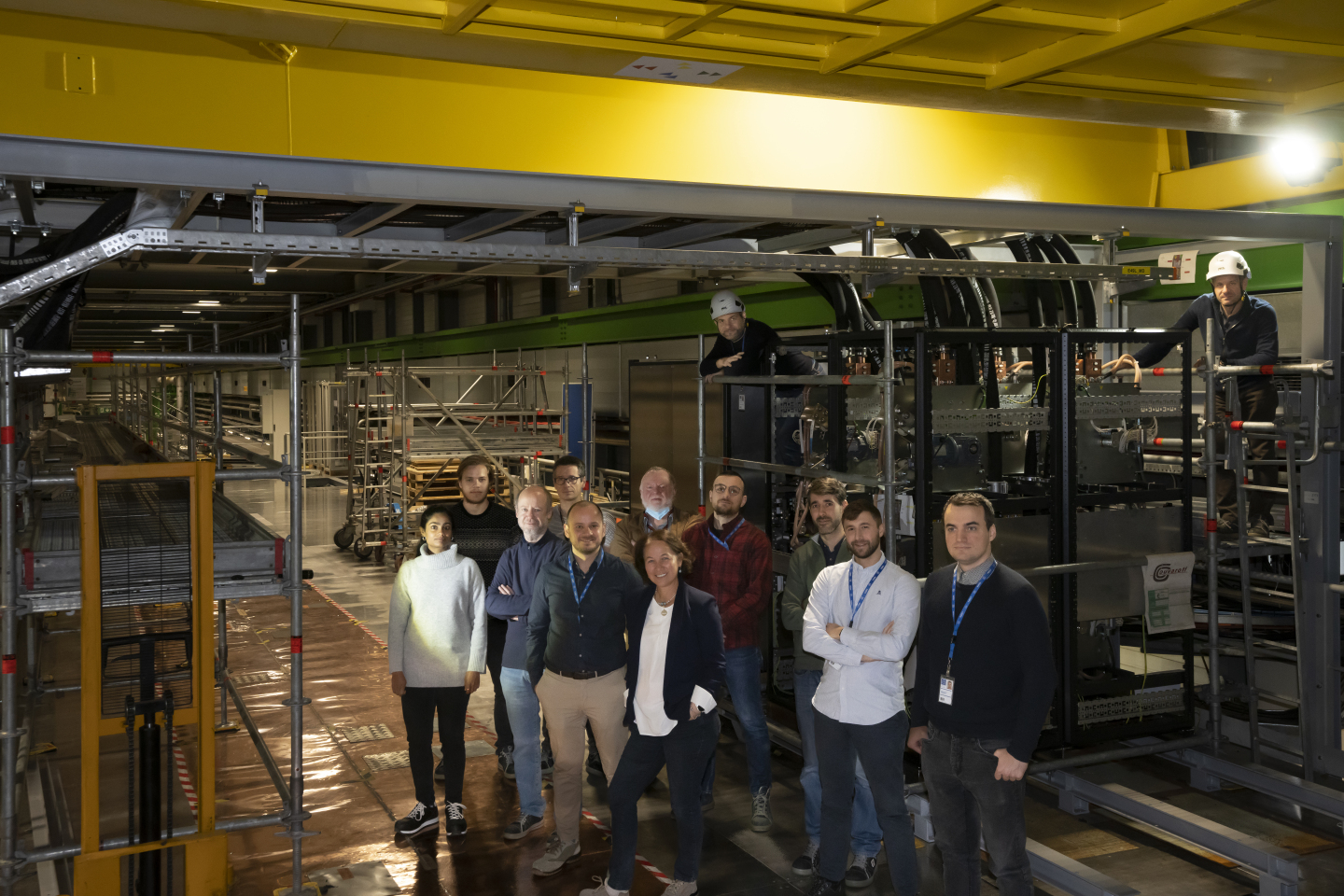
Cryogenic Distribution Line, Demineralised Water System, Circuit Disconnector Boxes… The HL-LHC IT String is taking shape | Accelerating News
Cryogenic Distribution Line, Demineralised Water System, Circuit Disconnector Boxes… The HL-LHC IT String is taking shape | Accelerating News By WP16 HL-LHC IT String team in Accelerating News As mentioned on other occasions, the HL-LHC IT String is a key milestone for the High Luminosity LHC (HL-LHC). It will enable the project to test the collective behaviour
-
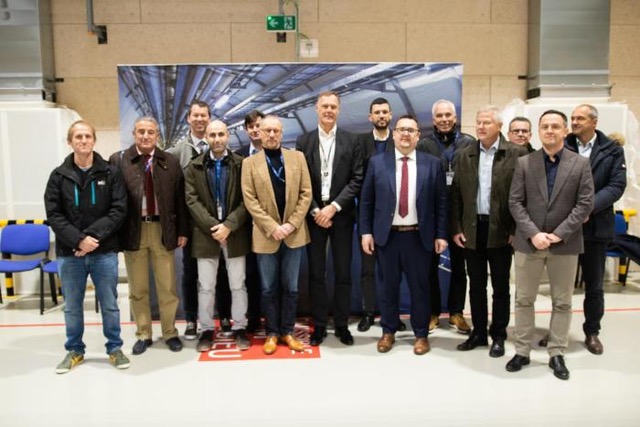
KrioSystem to supply cryogenic distribution line for the HL-LHC
CERN and contractor KrioSystem (PL) has signed the contract for the supply of two cryogenic distribution lines for the HL-LHC project. These cryogenic distribution lines are to be installed at CERN, next to the two major LHC experiments
-
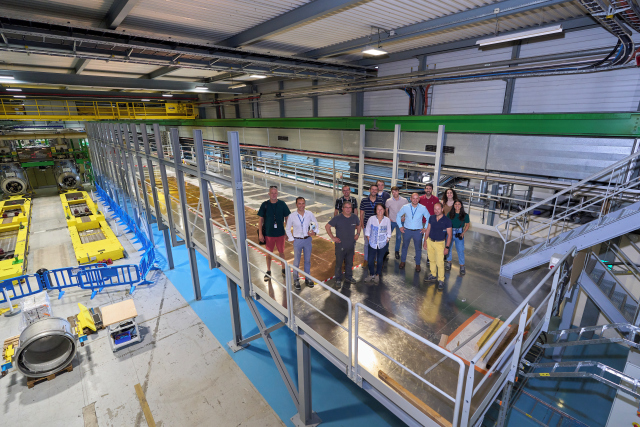
The SM18 test facility in the HL-LHC era | home.cern
The SM18 test facility in the HL-LHC era | home.cern By Anaïs Schaeffer (CERN) on home.cern The SM18 test facility, located in France, near the Meyrin site, was originally built to test and validate the magnets and radiofrequency (RF) cavities of LEP (the Large Electron–Positron Collider). It has since seen over 1700 such components pass through it – including, of