
Tag: WP3 – IR Magnets
-
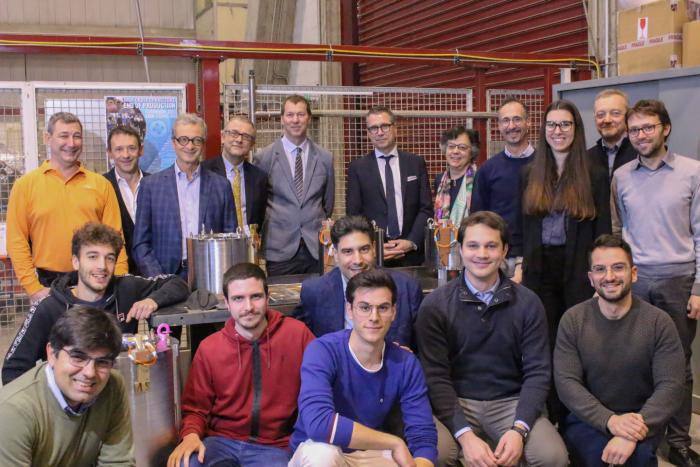
54 magnets: The High-Luminosity LHC receives its first in-kind contribution
By Marco Statera (LASA) – The completion of the High Order Corrector Magnet project was only made possible by the collaborative efforts of INFN, CERN, and industry, Accelerating News.
-

News from the Chamonix workshop
News from the Chamonix workshop | home.cern By Mike Lamont (CERN) on home.cern There has been sustained international effort and good progress on the HL-LHC magnet front. The production of the interaction region magnets is progressing well, and prototyping and production of the NbTi magnets have passed through critical phases. The INFN twin aperture D2
-
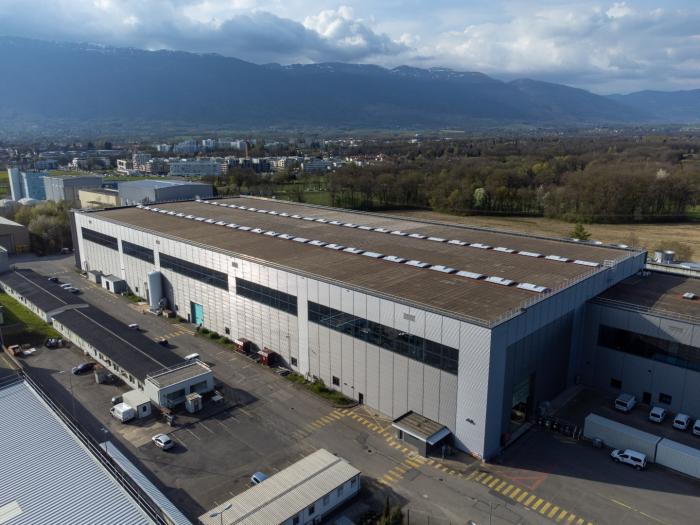
Building 180’s metamorphosis
The renovation that was completed in 2022 has transformed the appearance of CERN’s second-biggest building in terms of surface area while also improving its energy performance
-
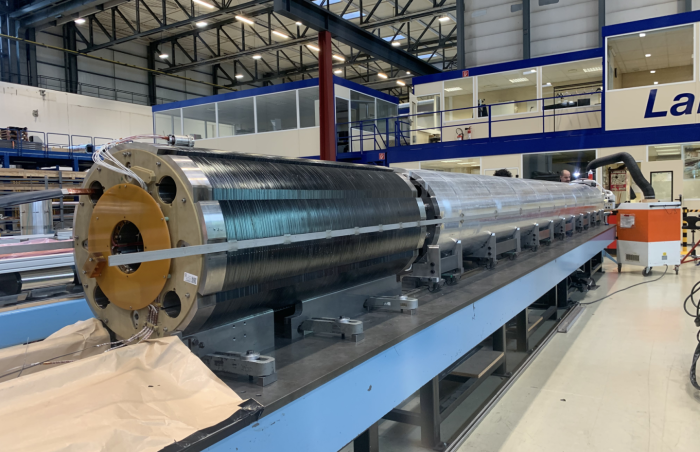
7.2-m-long niobium–tin quadrupole magnet manufactured at CERN reaches nominal current for the first time | home.cern
The 7.2-metre-long version of this vital HL-LHC component reached nominal current plus an operational margin corresponding to a coil peak field of 11.5 T at 1.9 K during a test in SM18..
-
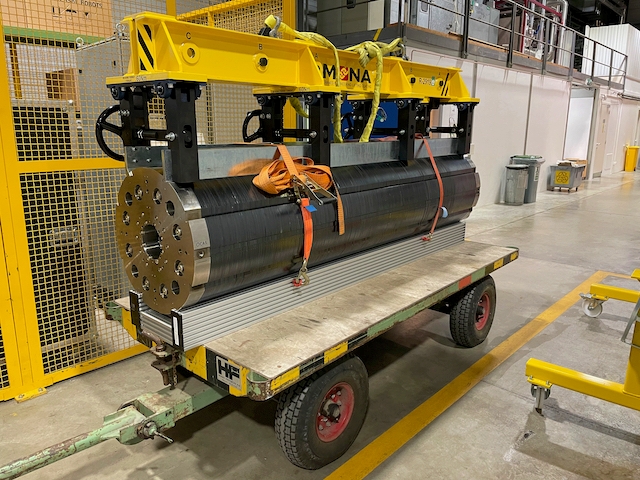
Test of the long nested dipole corrector
Test of the long nested dipole corrector By Ezio Todesco, WP3 Leader (CERN) The 2.5-m-long nested corrector prototype, named MCBXFAP1, has been successfully tested in the past weeks in SM18. The magnet reached the operational range at 7.5 TeV (ultimate current) with one quench and showed no retraining after thermal cycle, see plots below. The
-
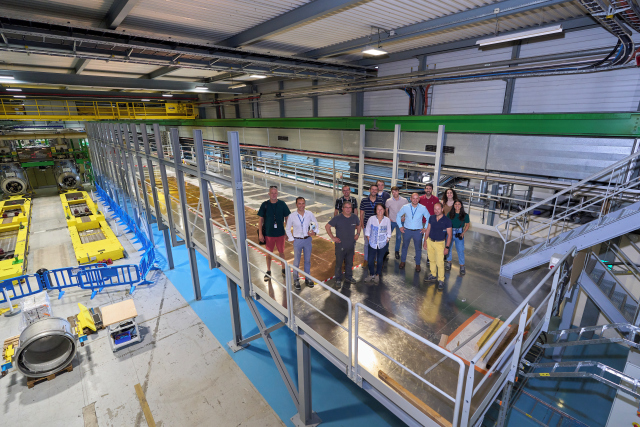
The SM18 test facility in the HL-LHC era | home.cern
The SM18 test facility in the HL-LHC era | home.cern By Anaïs Schaeffer (CERN) on home.cern The SM18 test facility, located in France, near the Meyrin site, was originally built to test and validate the magnets and radiofrequency (RF) cavities of LEP (the Large Electron–Positron Collider). It has since seen over 1700 such components pass through it – including, of
-
MCBRD01 test results
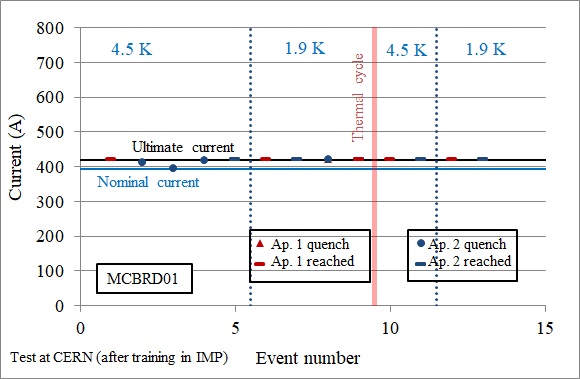
MCBRD01 test results By Ezio Todesco, WP3 Leader (CERN) Last month, the first series D2 corrector magnet, developed in the framework of the IHEP-China in-kind contribution, was tested at CERN. The magnet was manufactured at BAMA. The test at IMP showed the ability to reach ultimate current at 4.5 K, but with a retraining not in
-
MCBRDP4 test results
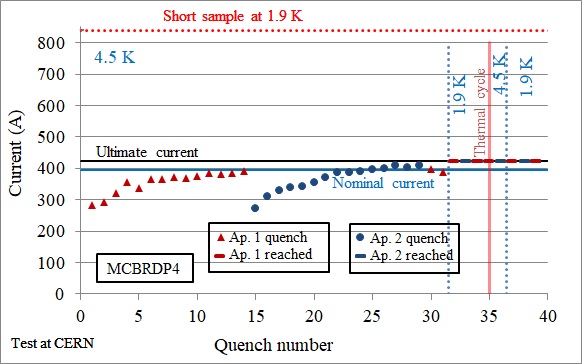
MCBRDP4 test results By Ezio Todesco, WP3 Leader (CERN) During the past weeks, the fourth prototype of the MCBRD magnets (orbit correctors of D2 based on canted cos theta design) has been tested at CERN. This magnet was fully built at CERN 927 using standard procedures, and has reached the performance requirements. The training was initially
-
MCBXF nested correctors
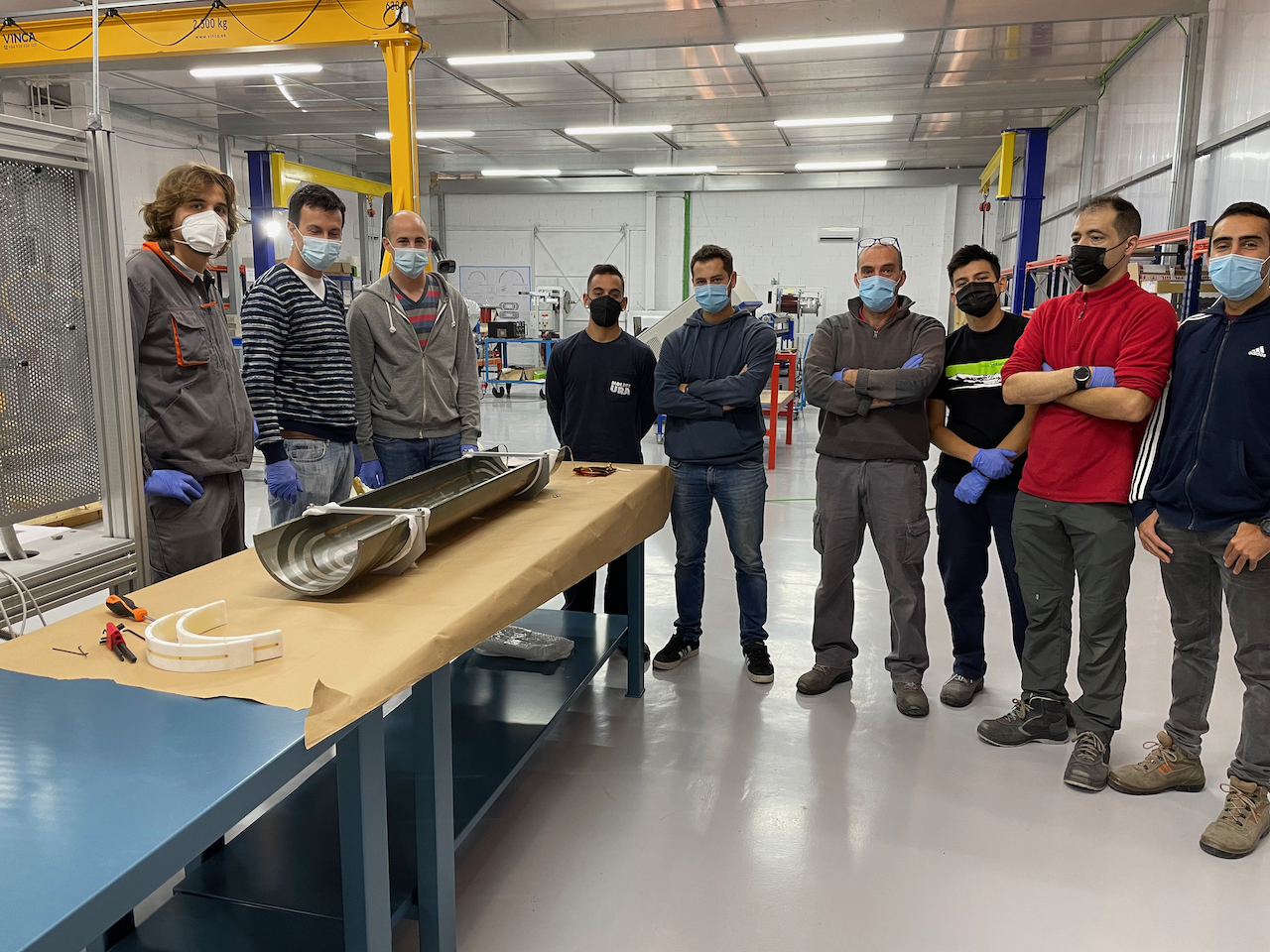
MCBXF nested correctors By E. Todesco and J. C. Pérez (TE Dept, MSC group, HL-LHC WP3) and F. Toral (CIEMAT) on behalf of the CIEMAT collaboration In June a new assembly of the second nested corrector prototype MCBXFBP2c has been tested in SM18 at CERN. The first version of this magnet manufactured in 2020 had a performance
-
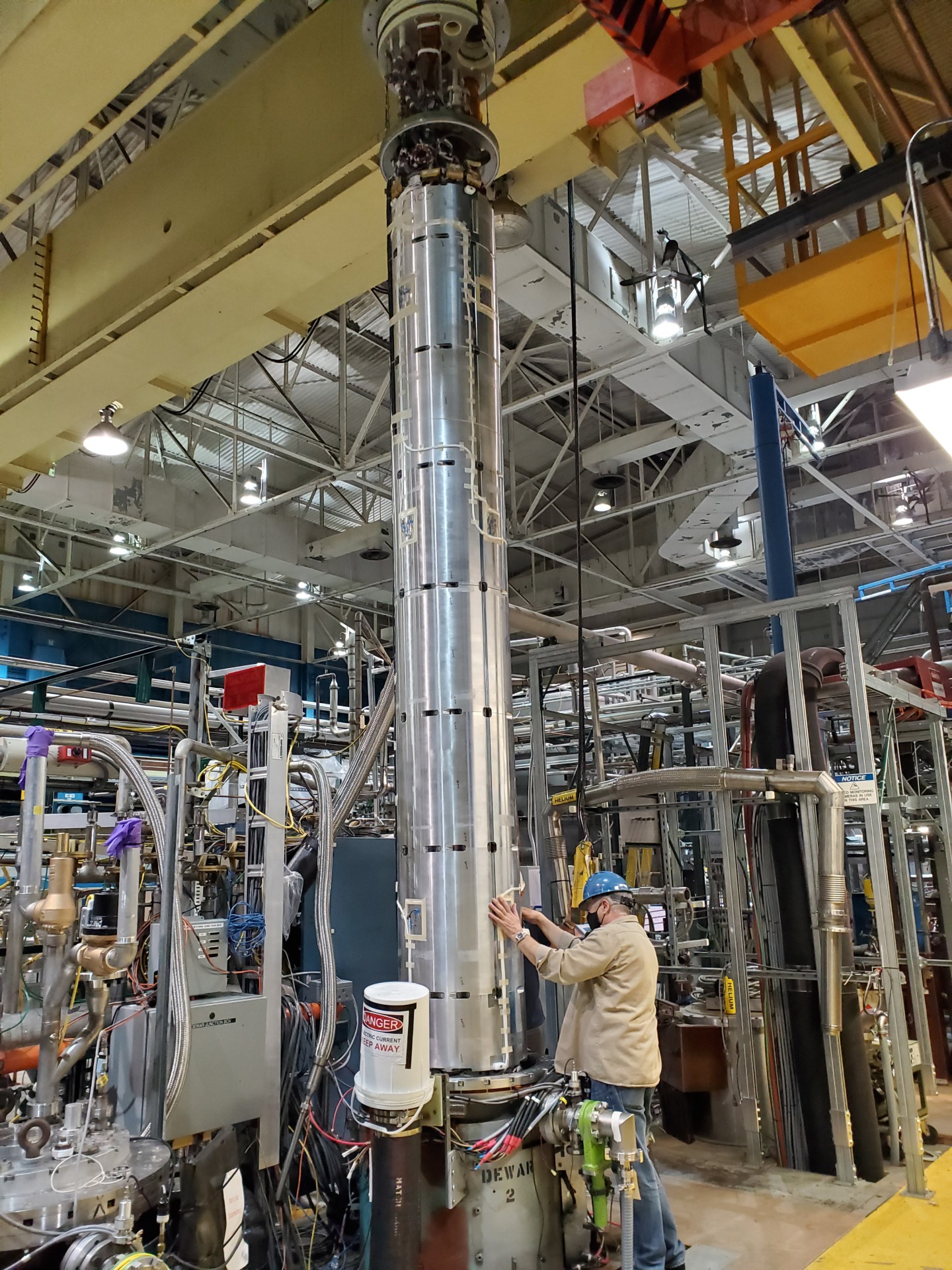
HL-LHC magnet endurance test further confirms niobium–tin’s resilience | home.cern
HL-LHC magnet endurance test further confirms niobium–tin’s resilience | home.cern By Thomas Hortala (CERN) on home.cern By Thomas Hortala – A full-size, US-produced HL-LHC quadrupole magnet based on niobium–tin technology has passed a critical endurance test, another step towards confirming the technology’s viability inside accelerators. Read on home.cern Read more news