
Tag: WP3 – IR Magnets
-
MQXFS4 results
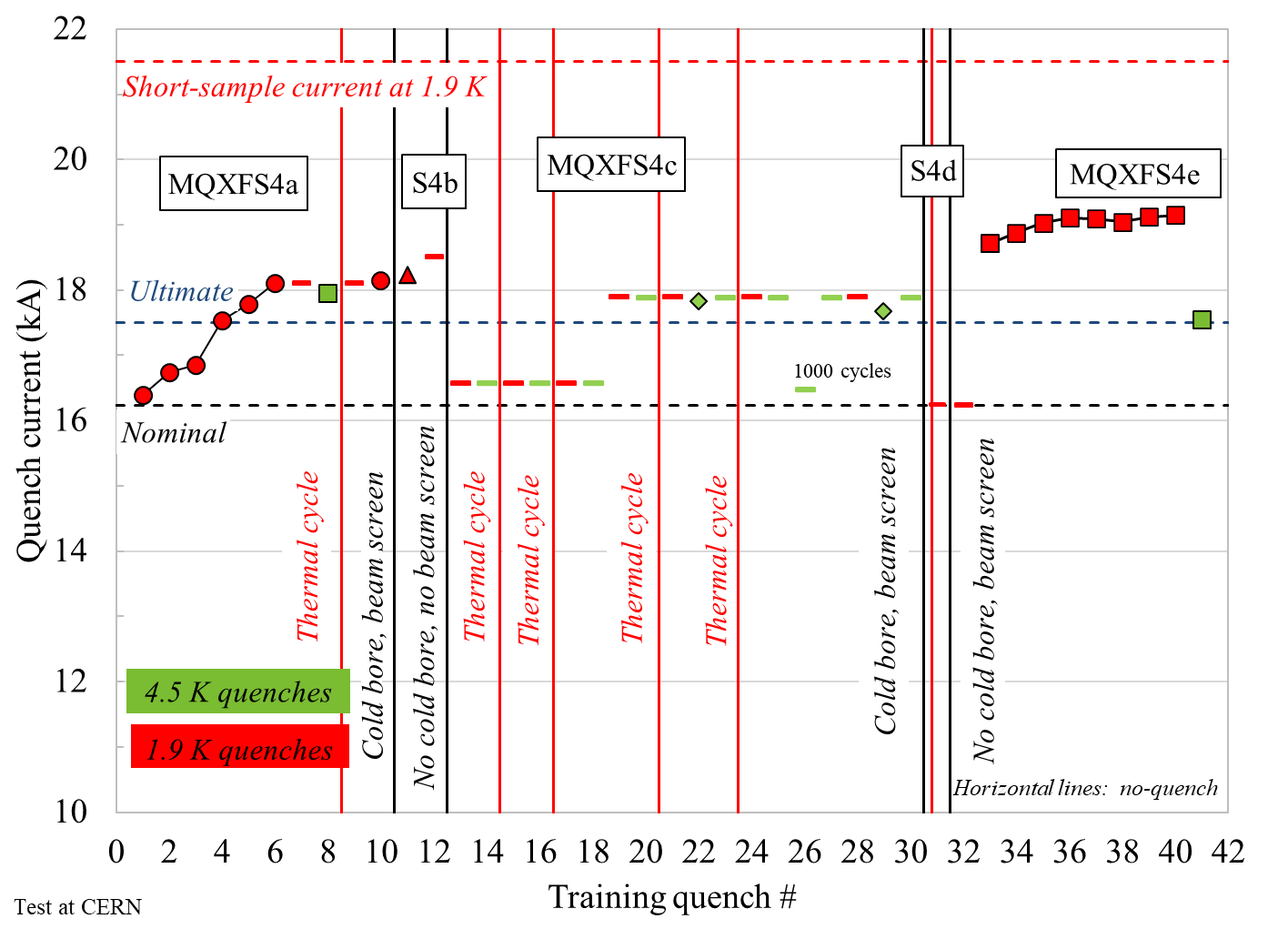
MQXFS4 results By Ezio Todesco, WP3 Leader The quadrupole short model magnet (MQXFS4), that went through endurance test in 2019, was retested at the end of 2021 to measure the magnetic effect of the beam screen. In this test run, following the 11th cooldown, the magnet reached ultimate current without quench at 1.9 K and
-
Series production of HL-LHC superferric High Order correctors is completed
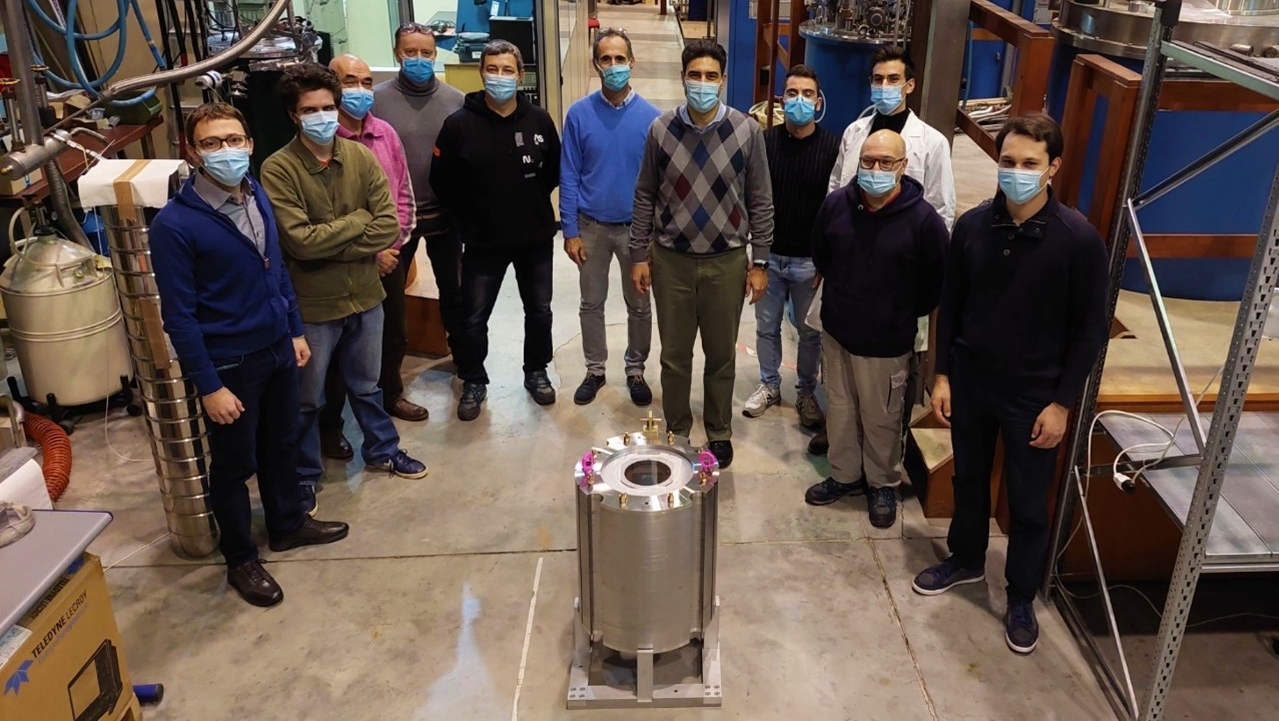
Series production of HL-LHC superferric High Order correctors is completed The High Order correctors for the HL-LHC project are designed to compensate for field quality errors of the main final focusing quadrupoles in the Interaction Regions of the high luminosity experiments ATLAS and CMS. They were designed at INFN LASA Milano and have been manufactured
-
MCBXFB magnets ready for series production after successful design iteration
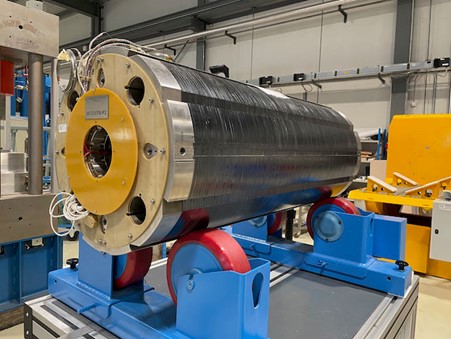
MCBXFB magnets ready for series production after successful design iteration By J. C. Perez and E. Todesco, TE Dept, MSC group, HL-LHC (CERN) In the HL-LHC machine, to be installed during the third long shutdown (LS3), the family of magnets named MCBXF (see figure above) will be located on both sides of the ATLAS and
-
QUACO at the finish line | Accelerating News
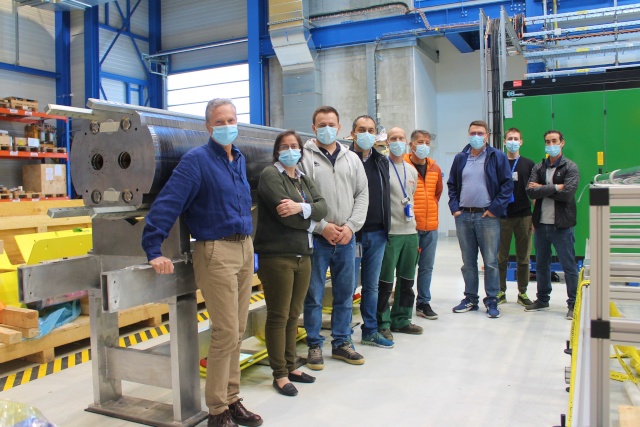
QUACO at the finish line | Accelerating News By Marcello Losasso (CERN) in Accelerating News Two 90-mm Niobium-titanium (NbTi) double-aperture quadrupole magnets, also called MQYY in the LHC vernacular, have been developed and manufactured by the companies Elytt Energy and SigmaPhi under the QUACO project for the High-Luminosity LHC upgrades. Read in Accelerating News. Related photos: link and link. Read more
-
Separation dipole prototype test results of the first run
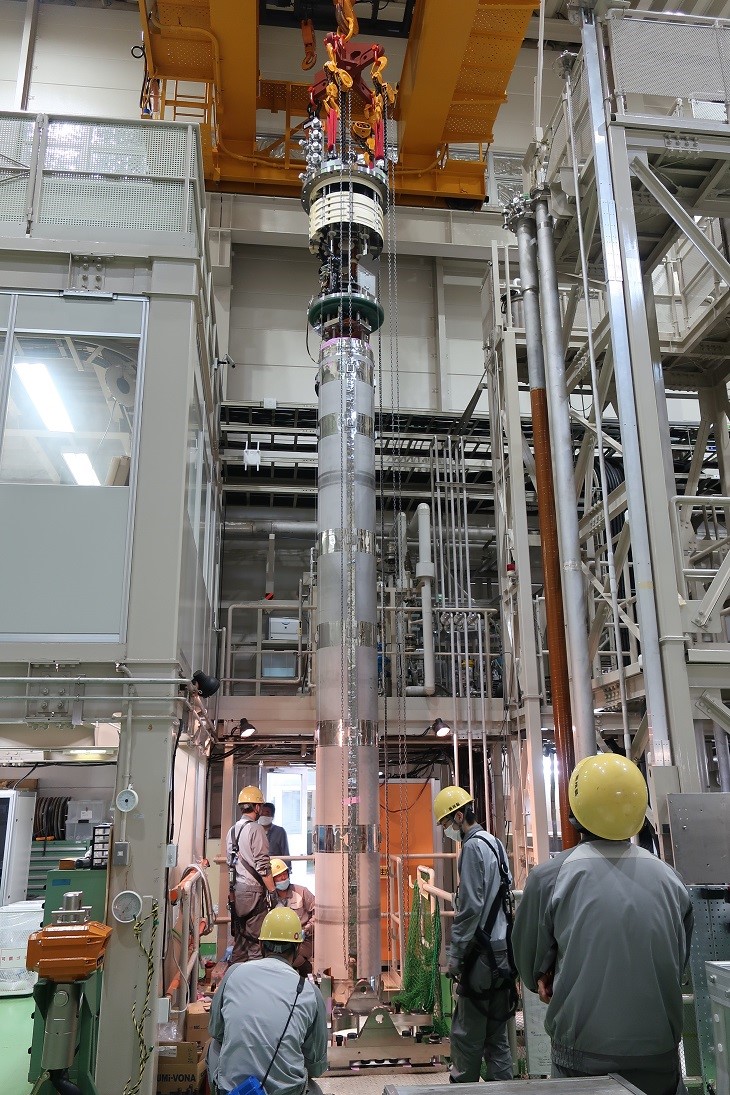
Separation dipole prototype test results of the first run By E. Todesco (CERN) and T. Nakamoto (KEK) Six separation dipoles will be delivered to CERN as in-kind contribution from Japan. The magnet design, manufacturing and testing is steered by a team led by Tatsu Nakamoto in KEK laboratories. In 2019 the short model program was
-
MQXFA05 and MQXFA06 vertical test results
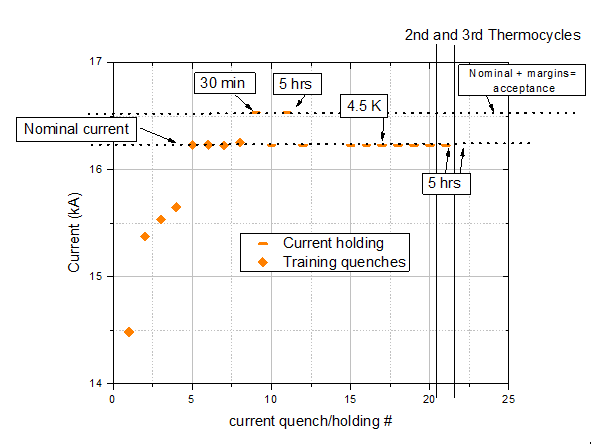
MQXFA05 and MQXFA06 vertical test results By Maria Baldini (Fermilab) The US Accelerator Upgrade Project (US-HL-LHC AUP) and CERN are designing and fabricating superconducting quadrupole magnets (MQXF) for a new interaction region of the High Luminosity Large Hadron Collider (HL-LHC). The Nb3Sn quadrupole magnets operate in superfluid He at 1.9 K, providing an integrated gradient
-
Qualifying HL-LHC magnets and cavities at Uppsala University | Accelerating News
Qualifying HL-LHC magnets and cavities at Uppsala University | Accelerating News By Roger Ruber (CERN), Kevin Pepitone, and Akira Miyazaki (Uppsala University) in Accelerating News Uppsala University in Sweden has been a valuable partner to CERN since the Laboratory’s foundation. In the 1950s, Uppsala, having just constructed its own cyclotron, contributed to the development of
-
Welcoming of the SigmaPhi magnet of the QUACO project
Welcoming of the SigmaPhi magnet of the QUACO project On the morning of 15 June, the QUACO quadrupole magnet manufactured by the French company SigmaPhi arrived at CERN. The magnet is now in B311, where magnetics measurements in one of the two apertures will be carried out to characterise the field performance. Called MQYY, this magnet is
-
Arrival of Elytt’s magnet, from the QUACO project, at CERN
Arrival of Elytt’s magnet, from the QUACO project, at CERN The first of the two QUACO quadrupole magnets, developed by the Spanish company Elytt Energy, arrived at CERN at the beginning of March. Magnetic measurements, which are expected to characterize the field performances, are being carried out at CERN in B311 and are almost complete. This
-
D2 short model tests results
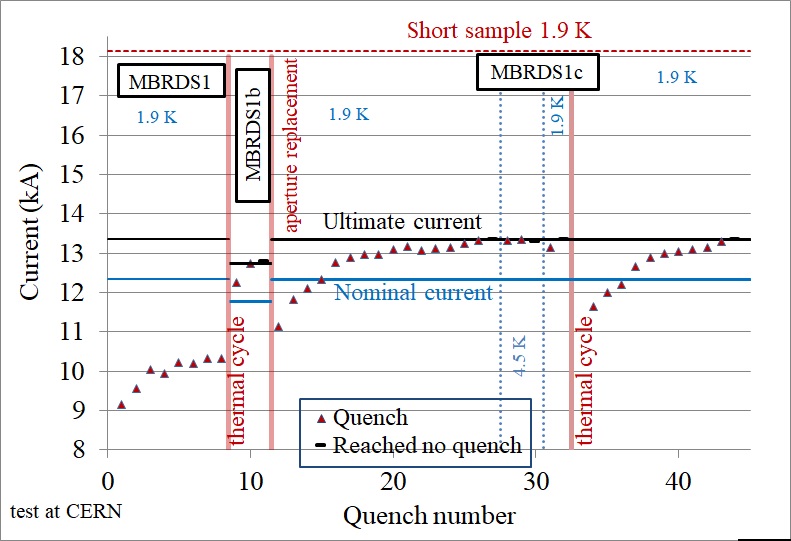
D2 short model tests results The D2 short model built under the collaboration agreement with INFN Genova, was tested in SM18, CERN, last August. This assembly, named MBRDS1c, which had one aperture replaced after finding a major damage in the cable at the location of the layer jump, is the only short model of the


