Knowing Hilumiers
Knowing HiLumiers is a project in which many members of the HiLumi LHC, past and present, were interviewed to gain an insight into the people of the project.
WP16 IT String & Commissioning Bees
The HL–LHC needs a hardware modification that will include the new powerful SC magnets with their powering system and the associated protection and ancillary equipment. Some bees will have to prove the functionalities and reliability of this new machine configuration.
The WP16 bees are in charge of this new hardware and its commissioning that includes: the preparation of detailed procedures, the definition of all the required parameters and the execution of the powering tests.
These bees collaborate with those of the other cells, in particular with WP3, WP6A, WP6B, WP7, WP9 and WP15.
Find out more about the IT String & Commissioning.
Marta Bajko
Read
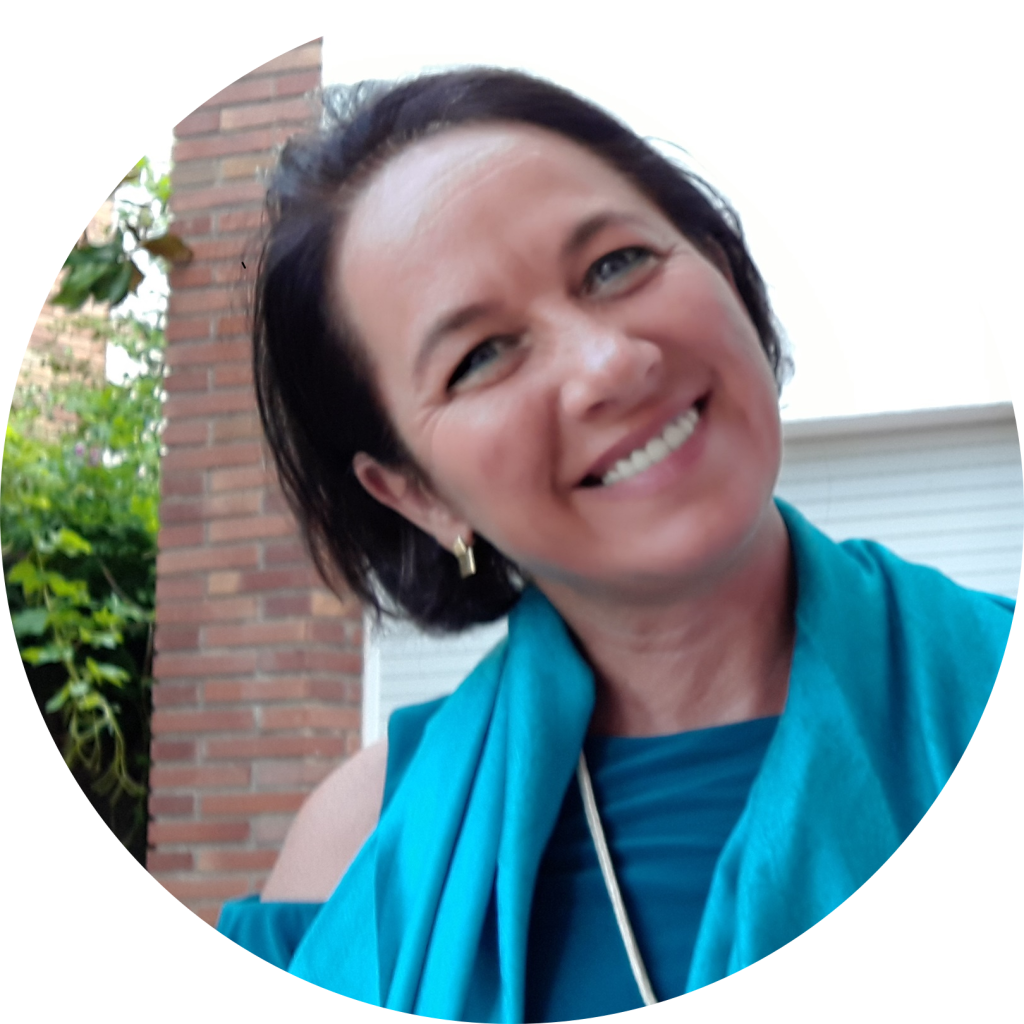
In a lost corner of the world, between mountains, is where Marta’s most peaceful place lies. A place of back to the reality, back to the basis, where she charges her batteries.
She was born in Gheorgheni (Romania), a small city located in eastern Transylvania, around 175 km from “Dracula’s Castle”. She spent her first 20 years in Romania, where many of her relatives still live, but she is also linked to Hungary because of her nationality and her culture. During four years, Marta studied mechanical engineering at the Budapest University of Technology and Economics and, shortly after, she became a CERNie.
Marta is the Section Leader of the TE-MSC-TF section at CERN. She started to work here as a research engineer, in charge of the superconducting magnet design, the fabrication and the contract follow up for the LHC dipoles. For 24 years, she has been at CERN, where she has developed her whole professional career.
She likes and enjoys what she does. Maybe that is why she finds beauty even in a piece of iron. At the entrance of building SM-18, where visitors await, there is a magnet that Marta recovered from one of the old storage areas. They turned it into a table. She likes that kind of object, those engineering pieces of art.
She has always loved the mountains. Although Marta’s blue eyes were already used to nature, she feels that this particular area, near the Alps, is quite amazing, in terms of landscapes, greenery and peaks. From time to time, Marta fantasizes about climbing Mont Blanc sometime. She still has doubts about it. This may always be one of her pipe dream, her voeu pieux, as the French would say.
Her mom always told her: help yourself and God will help you. A teaching that highlights the importance of self-initiative, and willingness. Marta comes from a quite religious community. She does not believe as they do, but she respects their beliefs. She is always down to earth. Still, this is a lesson that Marta would pass on to her daughter.
In one of his novels, Panait Istrati, a Romanian working class writer, stands up for goodness, saying that the goodness of one single man is much stronger than the evil of a thousand, because evil ends when it, metaphorically, dies, but good is transmitted to others and remains even after it dies. Marta completely agrees with him. She thinks that everything is relative and that if you insist on trying to change everything in a positive way, there is always a positive side in everything. It is a question of trying to see it.
One day, Marta will return to spend more time at those lands that saw her grow, where she used to play without a care in the world. That very lost place with no electricity, water or network. A special corner that is quite difficult, but very satisfying, to reach.
To go back to the roots, one day, because as it is said in one of Roberto Benigni’s movies, “life is not perfect, it is not coherent, it is not easy, it is not eternal, but in spite of everything, life is beautiful”.
Irene Garcia Obrero / CERN 2020
Samer Yammine
Read
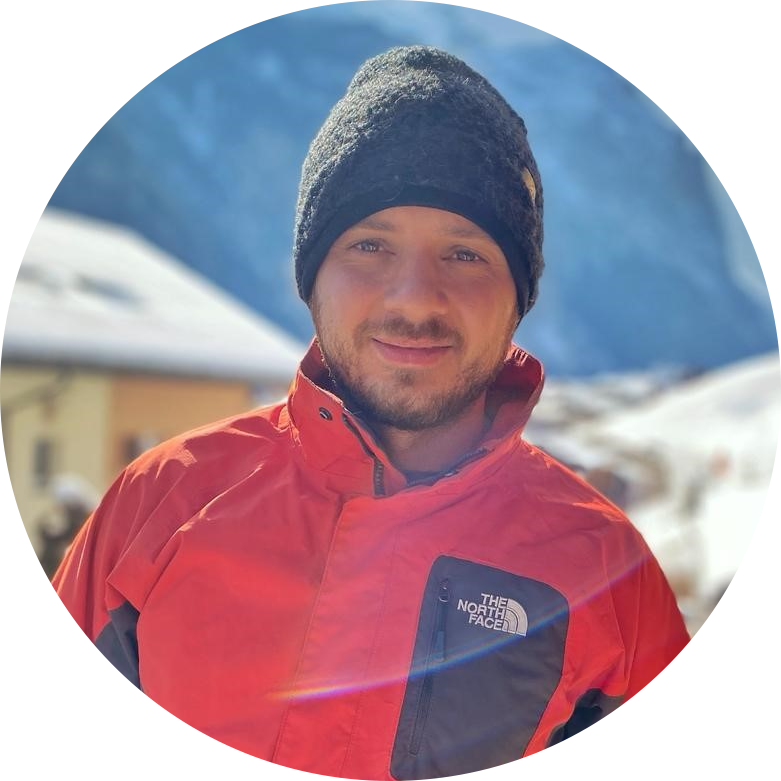
Just over five years ago, Samer, an electrical engineer, became a HiLumier. Since then, he enjoys the delicate mix of human interaction and technical work at CERN.
He is part of a team made up of people with very diverse backgrounds, something that has helped him grow personally and professionally, and that also keeps him assembled to beauty. The beauty of people working together and achieving something bigger than themselves. The beauty of union.
The challenging technical tasks that Samer carries out on a daily basis often lead him to reopen his university books and notes. And returning to those university years means going back to Toulouse, to its pinkish terracotta bricks, its warm climate, and the taste of a chocolatine.
When Samer was 20 years old, he moved to La Ville Rose to study electrical engineering. After his master’s degree at ENSEEIHT, he did his PhD on “Electric Machine Design and Control” with Renault and right after that, he joined CERN, which was a dream come true.
Samer’s childhood dream was to work on a project that would push the boundaries of human knowledge, even of human capabilities. Now he feels he is part of it. On the list of half-fulfilled dreams is to get more and more involved in environmental projects. He wants to actively contribute to a better future.
“To understand the heart and mind of a person”, wrote the Lebanese-American poet Khalil Gibran, better known in his homeland as Jibrān Khalīl Jibrān, “look not at what he has already achieved, but at what he aspires to”.
Samer was born and raised in Lebanon’s capital, Beirut, where beauty and chaos combine on the shores of the Mediterranean. Although the city faded a little last August, it did not suffocate from Samer’s memories, which still revive its colourful streets and, as it is said in French, its joie de vivre and insouciance. “We enjoy the day, we never think about tomorrow”, says Samer.
But if tomorrow, “today’s dream” for Khalil Gibran, is to be imagined, Samer does so with optimism. He hopes that in about 10 years we will be living in a more sustainable and harmonious society. And, by then, he also hopes to have witnessed the High Luminosity LHC in operation.
Whatever happens, Samer has already contributed, and continues to contribute, to this large project, and to this today. Besides, and this was not said by Khalil Gibran, “Hilumier once, Hilumier forever”.
Irene Garcia Obrero / CERN 2021
Paula Martínez Urios
Read
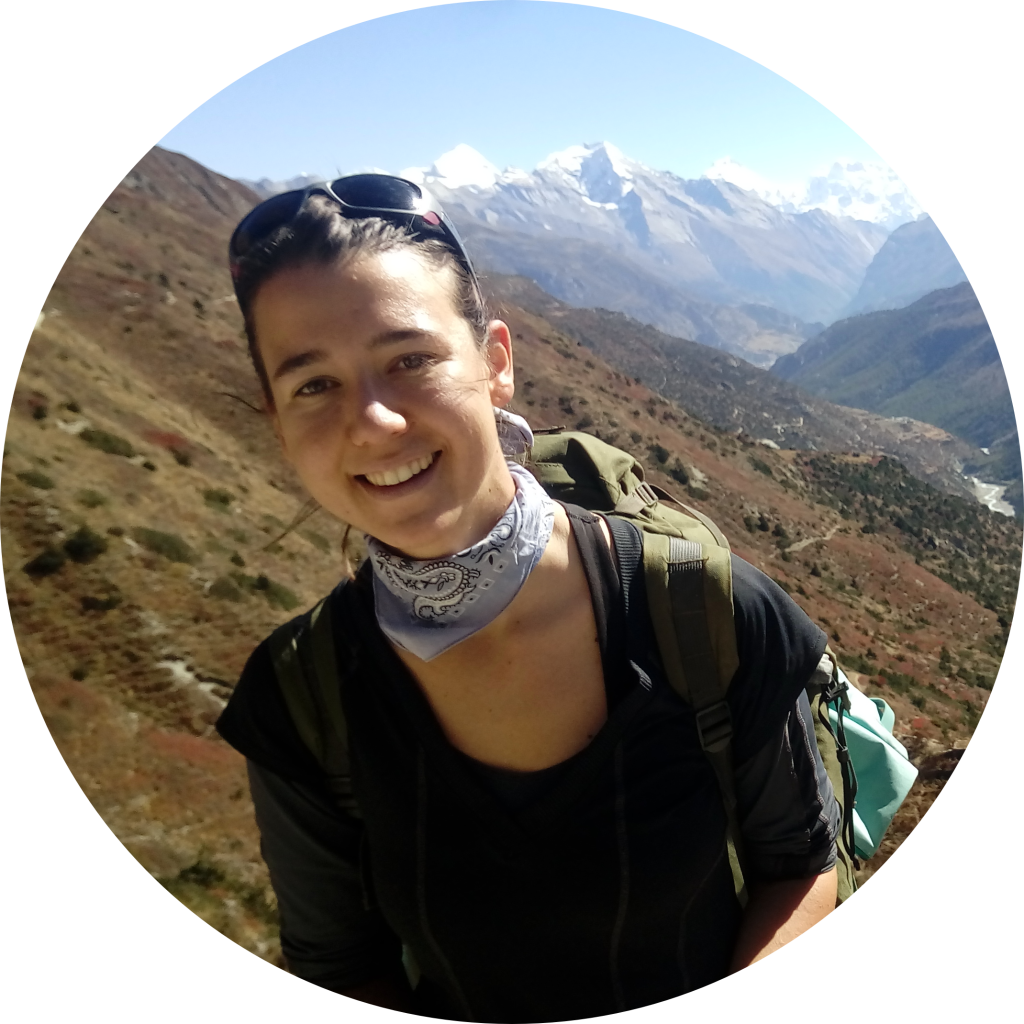
Work in progress. This could be Paula’s current status. This could be anyone’s current status. The people that surround her, the ones that she admires and every new experience that gets her out of her comfort zone are still making Paula the person that she will be tomorrow. Today, she is the baggage of the past that was packed on the basis of some ethical principles that remained unchanged.
Originally from Madrid, Paula is now a CERNie living in Geneva. She studied the Hydraulics track of Civil Engineering in the Spanish capital and, during the 4th course, she did an Erasmus in Istanbul (Turkey). 10 months out of 27 years could seem a tiny proportion, but it is not just a matter of quantity.
Paula talks about Istanbul like a grandmother talks about her grandchildren. Same illusion, same affection. She still has the feeling that she did not discover even one percent of what the city had to give. Although Istanbul was not the first option on her Erasmus list, the Turkish city embraced her very warmly. For Paula, it was similar enough to Spain to not miss it, and different enough to surprise her every day. She never felt a foreigner there. She could taste the Mediterranean culture, the one that Serrat used to sing about.
Is the re-encounter already planned? Paula wonders very often whether she should go back, but then she remembers Sabina singing, “al lugar donde has sido feliz no debieras tratar de volver”. Irremediably, Istanbul will always keep a piece of Paula. She lost part of her scales there.
Day after day, she bumped into beauty: in its sunsets over the mosques, in the blues of the Bosphorus and in the song of the seagulls. For Paula, beauty is that characteristic of something, and by something it is really anything, that you can observe forever. And observing means if it is a song to listen to it, if it is nature to look at it, if it is a person to just be with that person. No rush with beauty.
Paula is leaving CERN next July and she will start a double master’s degree in Sustainable Energy Systems in Sweden and the Netherlands, after spending a few weeks in Madrid, where music festivals and concerts will be waiting for her, together with that “buen rollo” that does not have a literal translation outside southern Europe.
She lets herself go a bit, like the tide. She may do it after her master studies: to guide herself by intuition, which has worked so far. Because, as Xoel López would sing, “la vida siempre tiene algo preparado”.
Paula dreams of continuing looking for a path, a path that makes her happy because it is not always easy to make choices and to give direction to our lives. She always keeps in mind something that her father told her when she was a kid: “lo perfecto es enemigo de lo bueno”. And perfection is also a happiness’ enemy. Sometimes, it is even better to live a bit below perfection. Sometimes, an approximation is good enough.
Although you never feel fully ready to leave, by mid-summer, Paula will say goodbye to CERN, that world with its own microclimate and people that haven been shaping her for the past three years. Same path, different surroundings.
Like a piece of Paula stayed forever in Istanbul, another piece of her will always remain at CERN. Another particular place where she lost her scales.
Irene Garcia Obrero / CERN 2020